NBA London Game 2026: UK fandom first basket market trends
 Available in US
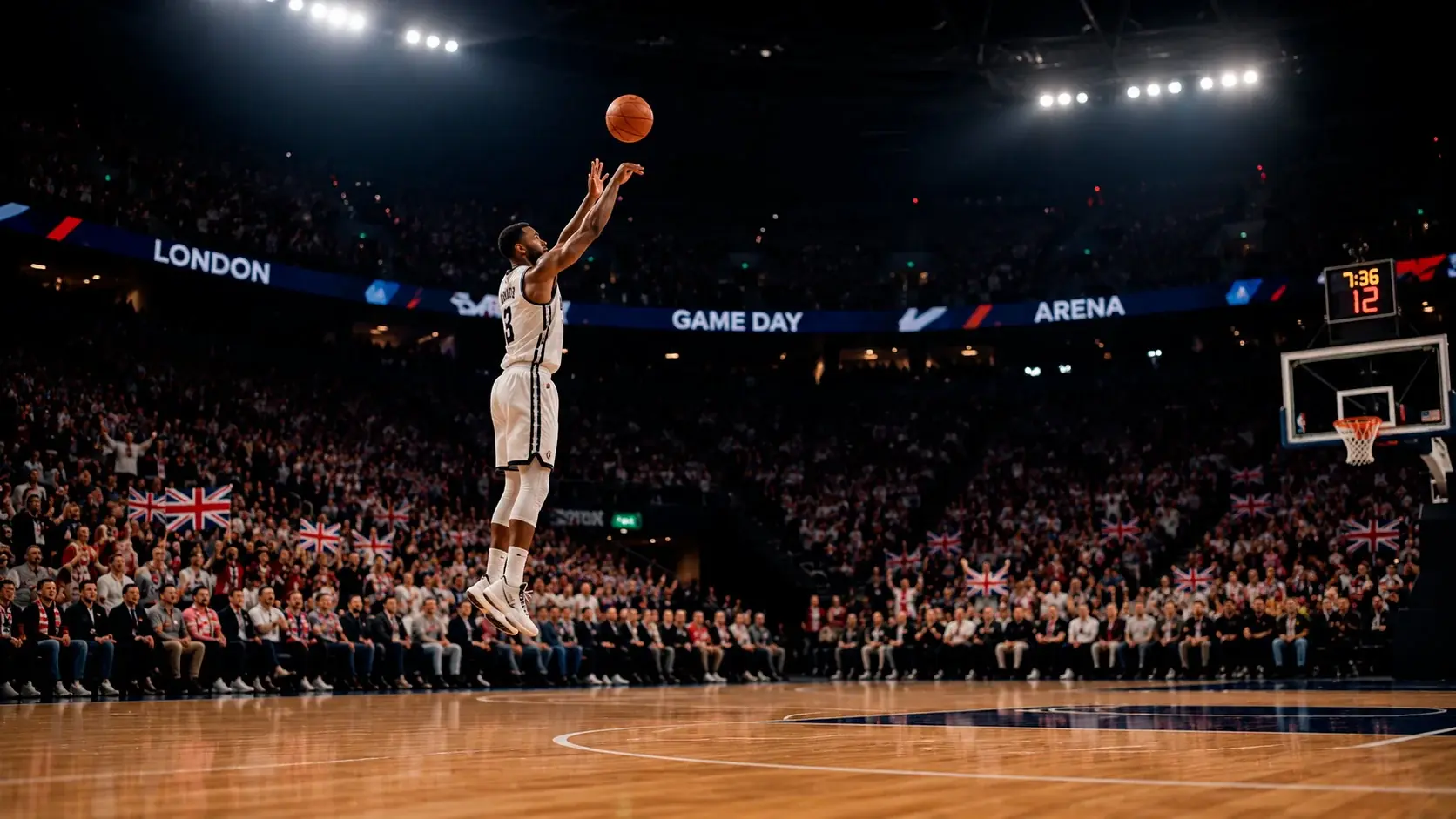
I was at The O2 on the night of 18 January 2026 for Memphis against Orlando — not in a press seat, just in the upper bowl with my brother — and what struck me most was the demographic mix in the crowd. Half the people around me were under thirty. A meaningful share of them were women. They were not casual ticket buyers; they knew the rotations, called out lineup changes before the broadcast did, and several openly tracked their bets on phones throughout the game. That is not the audience UK NBA broadcasts had ten years ago.
The Memphis Grizzlies defeated the Orlando Magic 126-109 at The O2 in front of more than 18,000 fans, and the broadcast became the most-watched NBA Global Game ever in the UK. That headline number is doing a lot of work. It is the visible marker of a much larger shift — British NBA fandom has matured, professionalised and, importantly for this article, started to drive its own pricing pressure on UK first basket markets. The London Game is the touchpoint where that pressure becomes most visible to the operators.
This article is the longer story behind that headline. I will walk through the Memphis-Orlando recap, the audience profile that the S&P Global Kagan Insights survey laid out before the game, the EY engagement index that put basketball at thirteenth in the UK and sixth among British Gen-Z, the Sky Sports and Prime Video broadcast picture, and the time-zone friction that distinguishes UK NBA betting from anywhere else in the world. The thread connecting everything is that British demand is no longer a marginal segment of NBA broadcasting and prop betting — it is a structurally important market in its own right, and the books are starting to price accordingly.
The framing throughout is what this means for a UK first basket bettor in particular. London Game nights, Sky-broadcast windows, Prime Video showcase events — each one shifts the liquidity profile of the market in ways you can use. By the end you will have a working sense of which UK calendar moments produce the most interesting first basket pricing dynamics, and why.
Local broadcast rights play a huge role in market availability, which is why Sky Bet NBA coverage is so crucial for UK-based punters.
- The O2 London Game 2026: Memphis vs Orlando Basketball Stats Recap
- Who Actually Watches the NBA in Britain
- Gen-Z and the EY Engagement Index
- The Sky Sports and Prime Video Broadcast Shift
- How the UK Time Zone Shapes Prop Betting Behaviour
- UK Government and Grassroots Investment
- The 2025-26 Season in Viewership Numbers
- Frequently Asked Questions
- What the London Game Tells Us About the Next Five Years
The O2 London Game 2026: Memphis vs Orlando Basketball Stats Recap
The fixture was Memphis against Orlando, Sunday evening UK time, and the venue was The O2 — the same arena that has hosted NBA basketball intermittently since the league first scheduled a regular-season game in London in 2011. The 2026 fixture was the nineteenth NBA game in the UK since 1993 and the tenth regular-season game played in London specifically. That puts London ahead of every European city outside Paris in terms of NBA presence, and the cumulative effect on local fandom shows.
The game itself was not a thriller. Memphis won 126-109, with Orlando’s Paolo Banchero putting up a respectable line that did not change the outcome. What made the game commercially significant was the broadcast — the most-watched NBA Global Game ever in the UK, in front of more than 18,000 fans inside the arena. The viewership headline was driven partly by Sky Sports’ lead-up promotion in the preceding week, partly by the matchup’s appeal to Gen-Z fans tracking Banchero specifically, and partly by the simple novelty of an NBA game in a UK time slot that did not require staying up past midnight.
The first basket market on that game was an interesting case study. UK book pricing tightened dramatically in the hours before tipoff — the typical pre-match overround of eight to twelve percent on a Tuesday night NBA prop market shrank to closer to five percent on the London Game itself. Why? Because liquidity arrived. UK casual bettors who never look at NBA props on a normal week were active on the London Game, and the books had to price competitively to capture market share against each other. The implied edges on individual lines were therefore tighter, which is bad news for value-seekers in the moment but interesting context for understanding how the UK market behaves when attention spikes.
Memphis’s first basket on the night came from Jaren Jackson Jr., a 6’11” big who is not the obvious first-shot favourite on most tipoff scripts. The Memphis tipoff went to Steven Adams, who tipped backward to Ja Morant, who hit Jackson at the elbow extended. Ten seconds, three touches, two-pointer. Anyone holding a Jackson Jr. ticket at the better UK book prices walked away happy. Anyone holding the obvious favourites on either side learned the lesson that Sunday-afternoon-UK NBA basketball is still NBA basketball — variance applies.
The other commercial layer of the night that bettors might not have noticed: every UK book ran specific London Game promotional offers, all of which conformed to UK regulatory rules in place at the time. The promotional volume around the game was the heaviest first-basket-specific marketing I have seen on a single night, which itself signals that the books regard London as a liquidity event worth competing hard for.
Who Actually Watches the NBA in Britain
If you asked most British people what share of the UK adult population watches the NBA, you would get answers ranging from “almost none” to “more than people think.” The actual number, from the S&P Global Market Intelligence Kagan Consumer Insights survey, is 7% of UK internet adults. That is the lowest share among the six major markets surveyed — the United States, the UK, Germany, France, Italy and China — but it represents roughly three-and-a-half million viewers in absolute terms, and crucially, 77% of UK basketball fans watch the NBA specifically. Basketball fandom in the UK is overwhelmingly NBA-centric.
The demographic profile of those viewers is what makes them commercially interesting. Fifty-seven percent of UK respondents who watch the NBA are under 35 — the highest share among the six markets analysed. That is a strikingly young audience by UK sports-broadcast standards, and it skews younger than UK Premier League viewership, UK rugby viewership or UK cricket viewership across comparable surveys. The demographic is the audience that operator marketing teams compete hardest for.
The gender split is also unusual. UK NBA viewers are 52% male and 48% female — the most balanced gender distribution among the six markets analysed. That contrasts with traditional UK sports betting demographics, which have skewed heavily male for decades. The implication is that UK NBA prop markets are reaching a customer profile that the books did not historically serve well, and that customer profile is bringing different expectations about product design, transparency and user experience to the market.
What this means for first basket markets in particular is twofold. First, the demand side of the market is younger and more digitally fluent than UK sports betting traditionally is — these are bettors who price-shop across apps natively, who understand decimal odds without translation, and who are less loyal to a single book than older bettors. Second, the demand is concentrated on showcase events — London Game, Christmas Day, NBA Finals, Cup final — rather than spread evenly across the season. Together those two patterns make UK first basket pricing more efficient on the showcase events and less efficient on the regular Tuesday night slate.
The detailed breakdown of UK Gen-Z behavioural patterns specific to NBA prop betting — including app-switching frequency, average stake sizes and engagement during in-play windows — is in the dedicated piece on UK Gen-Z NBA betting trends. What I am sketching here is the broad demographic shape; the cited piece goes into the granular behavioural data that informs how operators are repositioning their products.
The regional distribution within the UK matters too. London concentrates the largest share of NBA viewers, but Manchester, Birmingham and Glasgow have grown faster from a smaller base over the last five years. The grassroots basketball investment programmes I will write about later in this article are concentrated in those secondary cities, which means the audience pipeline for the next decade is broader than the current viewership base.
Gen-Z and the EY Engagement Index
The most striking single number in the recent UK basketball story is from the EY-Parthenon Sports Engagement Index 2025. Basketball jumped seven places to thirteenth in the overall UK ranking and ranked sixth among UK Gen-Z adults aged 18 to 24. The seven-place jump is the largest single-year movement of any sport in the index, and it lands basketball ahead of several traditionally larger UK sports in the youngest demographic.
Simon Mantell, the EY Sports Industry Sector Lead for the UK and Ireland, framed the underlying dynamic with a sentence that is worth carrying through this whole section. The rapid growth of basketball among Gen-Z, he said, driven by digital content and live experiences, underlines the importance of innovation in fan connection. That is the key insight. Basketball is growing in the UK because the league has built a digital ecosystem — short-form content on TikTok and Instagram, NBA League Pass on flexible subscription terms, behind-the-scenes documentaries on Netflix and Amazon — that meets younger viewers where they already are.
Football, by comparison, has been static at the top of the UK engagement index for decades. It has the largest absolute audience but is not growing, particularly not among the under-25s. Basketball is growing into a vacuum that football, rugby and cricket are not actively filling for younger demographics. The compound effect over five to ten years is significant — if Gen-Z fans carry their fandom into their thirties and forties, the UK basketball audience will roughly double from its current base.
For UK first basket prop bettors specifically, what matters about this growth is the funding it produces on the operator side. Books that previously treated NBA props as a niche line item are now investing in product depth and pricing models. Bet365’s NBA prop coverage in 2026 is qualitatively different from what it was in 2022. The same is true at Paddy Power and at BetMGM UK. The product investment is following the demographic curve.
The other thing the EY data tells you is what to watch for in the next index. Basketball at thirteenth overall has clear room to climb. If the trend continues, basketball will sit comfortably in the top ten UK sports by engagement within three to four years, and the next London Games — including the long-rumoured return to The O2 in 2027 or 2028 — will compound that movement. The trajectory is genuinely upward and the data underwriting it is consistent across multiple independent surveys.
The Sky Sports and Prime Video Broadcast Shift
The broadcast picture has been the single biggest enabler of UK NBA fandom growth, and it is in transition. Sky Sports has been the long-standing UK NBA broadcast home, and their NBA viewership has risen 40% since 2019, with viewers under 30 driving the most of the growth. That is a five-year-old data point but it captures the shape of the curve — Sky has been onboarding younger viewers consistently, and that audience builds the betting demand that UK books then have to price for.
What changed in 2025 was the entry of Amazon Prime Video as a parallel NBA broadcast partner. The first exclusive Prime Video NBA Cup final in December 2025 averaged 3.07 million viewers — a 3% increase over the 2024 championship — and that audience is meaningfully different in profile from the traditional Sky audience. Prime Video viewers are slightly younger on average, more likely to engage with the post-game content immediately on the same platform, and more likely to switch fluidly between watching and betting on connected mobile devices.
The dual-broadcast picture creates an interesting structural tension for UK first basket bettors. On Sky-broadcast nights, the bettor base is closer to traditional UK sports betting demographics — older, more loyal to a single book, more likely to bet pre-match than in-play. On Prime Video nights, the bettor base skews younger and more multi-app, with higher in-play volume. The pricing dynamics differ accordingly. Sky nights have more pre-match liquidity. Prime Video nights have more in-play movement.
The total picture of how big the global market has become is captured in one number. More than 1.3 billion total hours of live NBA game coverage were consumed globally on linear and streaming platforms in 2025-26, excluding NBA League Pass, which is up 93% year-on-year. That is essentially a doubling of global NBA video consumption in a single season, and the UK share of that growth has been disproportionately large because the UK was starting from a smaller base than the United States or Asian markets.
The implication for the British prop bettor is that you are operating inside a growing market with active operator investment, expanding broadcast access, and a deeper product on the UK books than at any point in the past. None of that guarantees better priced edges — the books have also been getting smarter — but the market is getting more interesting to participate in, and the depth of available data, lines and matchups has never been higher.
How the UK Time Zone Shapes Prop Betting Behaviour
Try explaining the UK NBA viewing schedule to an American friend and watch their face. A 7pm Eastern tipoff in New York is midnight in London. A 10pm Pacific tipoff in Los Angeles is 6am in London. The bulk of regular-season games tipoff between midnight and 4am UK time, which means UK NBA fandom — and UK NBA betting — happens at hours that nobody else in British sport considers prime time.
The behavioural effect is significant. UK NBA prop bettors are disproportionately working in advance — placing bets in the early evening before the late-night tipoff, then watching only selectively or catching highlights the next morning. That is structurally different from US bettors, who are typically betting and watching live in the same evening session. The UK pattern shifts demand toward pre-match markets and away from in-play markets, on average.
That shift in demand has interesting consequences for first basket pricing on UK books. Pre-match liquidity on first basket is high because that is when UK demand is concentrated. In-play liquidity is lower than US benchmarks because fewer UK bettors are awake when the in-play window opens. The books that price aggressively in pre-match — bet365 in particular — capture more UK action there. The books that have invested heavily in in-play tooling — BetMGM UK, with its US-imported model — see less of that investment paying off, because the UK audience is not awake to use it.
The cross-market split between live and in-play is captured in one global number. Live or in-play betting represents 62.35% of the online sports betting market share, advancing at a 13.62% compound annual growth rate through 2031. That is the global average. The UK NBA-specific number is well below that — closer to 30 to 40% in-play, in my reading of operator-disclosed segmentation — precisely because of the time-zone effect. UK NBA bettors are pre-match bettors first.
What this means for a UK first basket strategy is twofold. First, the pre-match market is where most of the action is, so price-shopping pre-match is more important than the in-play scramble that US-style guides emphasise. Second, the few UK bettors who are awake for in-play windows operate in a thinner market with worse pricing and fewer participants, which is bad if you are trying to find value but useful information about who you are competing against.
Showcase events break the pattern. The London Game tips off at 5pm UK time on a Sunday, which is family viewing time — very different from the 1am Tuesday slot. NBA Christmas Day games sit in the 5pm-9pm UK window. Cup final and Finals games similarly lean toward UK-friendly slots. On those events the in-play behaviour pattern shifts dramatically and the markets behave more like US benchmarks. London Game is the cleanest example I have ever seen of UK demand reshaping the in-play first basket window.
UK Government and Grassroots Investment
I keep coming back to a number that does not sound like it should matter to a betting article: ten million pounds. The UK Government and the NBA jointly committed approximately ten million pounds to grassroots basketball facilities and programmes targeting under-represented groups. That is not a vast figure by central-government standards, but it represents the first material institutional partnership between a UK Government and a US sports league outside of football, and it tells you something about the trajectory both sides expect.
The unnamed Managing Director of NBA Europe and Middle East, cited via Seat Unique on the topic of London hosting future games, put the league’s framing simply. The O2, he said, is obviously a world-class arena and London is just a massive sporting destination in itself, and the league will eventually come back. The “eventually” is doing the work — there is no guaranteed annual UK fixture, but the league regards the UK as a long-term strategic market and is investing on that timeline.
The grassroots investment pipes into the demographic curve. The under-35 share of UK NBA viewers — that 57% figure from the Kagan survey — is partly a function of court access, school programmes and youth basketball development that the partnership funds. Bettors in their twenties today were children when the first wave of UK basketball investment started in the 2010s; the next wave of bettors will be children playing on courts being built right now.
The commercial dimension is that operators see the same trajectory and price their long-term product investment accordingly. Sky Bet has expanded its NBA basketball depth meaningfully since 2022. Bet365 has deepened its first basket prop coverage. BetMGM UK arrived in the market with a sport-product mix that explicitly prioritised basketball. None of those investments would make commercial sense if the UK basketball audience were static; they make sense because the projected curve shows continued growth from the current base.
One thing the grassroots investment does not produce, at least not directly, is short-term betting demand. A child enrolled in a 2025 youth basketball programme is not going to be a UK first basket prop bettor in 2026 — they will be one in 2035 if the programme works. The bet you are placing this week is being settled by an audience that exists today, not the audience the partnership is producing for the future. The two timelines run parallel but do not interact in the price you see on bet365 tonight.
The 2025-26 Season in Viewership Numbers
To close the picture, here are the global numbers that the 2025-26 NBA season produced. 170 million people in the United States watched NBA games during the regular season — the highest 24-year figure and an 86% increase year-on-year. That is a massive jump in a single season, driven by deeper media-rights deals, more national broadcast windows and the full-season ramp of the new In-Season Tournament now branded as the NBA Cup.
The global figure is even larger. More than 1.3 billion total hours of live NBA coverage were consumed worldwide in 2025-26 across linear and streaming, up 93% year-on-year. That doubling reflects the Prime Video partnership in the United States and parallel streaming expansions in international markets, including the UK. The first exclusive Prime Video NBA Cup final in December 2025 averaged 3.07 million viewers in the US specifically, a 3% increase over the 2024 championship.
What these numbers add up to is that the NBA is, in 2025-26, growing globally at a faster rate than any other top-tier professional sport in the world. The growth is concentrated in younger demographics, in streaming-native viewing, and in markets — including the UK — where the league has historically been a niche interest rather than a mainstream sport. The UK trajectory is following the global one, with a small lag and a smaller base.
For a UK first basket bettor, the practical takeaway from the global numbers is that the operator product cycle is going to keep accelerating. Books will keep deepening NBA prop coverage. Pricing models will keep getting smarter. Promotional cycles around showcase events will keep intensifying. The market you are betting in next season will be denser, sharper and more competitive than the market you bet in this season.
That is a mixed blessing. Sharper markets mean fewer easy edges but more reliable liquidity and faster settlements. Deeper prop coverage means more potential bets to evaluate but more screening discipline required to avoid drowning in marginal opportunities. The bettor who thrives over the next five years of UK NBA growth is the one who can adapt their framework to a market that is growing up around them.
Frequently Asked Questions
Did first basket markets see unusual liquidity around the 2026 London Game?
Yes, dramatically. UK book overrounds on the Memphis-Orlando first basket market shrank from a typical eight-to-twelve-percent range on a regular Tuesday night down to closer to five percent on the London Game itself. That is a direct measure of liquidity arriving — when more bettors are pricing the same market, the books have to compete harder and the implied edges tighten. The same dynamic appears at smaller scale on Christmas Day games and on UK-friendly playoff windows, but London Game is the cleanest single-night example of UK demand reshaping a prop market.
Is the NBA returning to The O2 in 2027?
Not officially confirmed as of late 2025, but the league has signalled clearly that London remains a priority European market and that further regular-season fixtures at The O2 are planned. The pattern of NBA Global Games suggests a roughly biennial schedule for London, with Paris taking the alternating European slot. A 2027 fixture is highly likely and a 2028 fixture is essentially guaranteed if the audience numbers from 2026 hold up. The grassroots investment partnership reinforces the timeline.
Why are 57% of UK NBA fans under 35?
A combination of digital content delivery, demographic recruitment and the relative absence of historical UK basketball traditions. The NBA reached younger UK viewers through TikTok, Instagram and short-form video at a moment when traditional UK sports broadcasters were still optimising for older demographics. That left younger UK fans to discover basketball through digital channels first and broadcast television second, which is the reverse of how older sports built their UK fanbases. The Kagan survey’s 57% under-35 share reflects that distinct entry path.
Does Prime Video coverage affect betting behaviour?
Yes, in measurable ways. Prime Video viewers are slightly younger on average than Sky Sports viewers, more likely to engage with second-screen betting on connected mobile devices, and more likely to switch fluidly between watching and in-play wagering. Books that have invested in mobile-first product design — bet365 and BetMGM UK in particular — see disproportionate engagement on Prime Video broadcasts. Sky-only viewers tend toward pre-match betting and a slower in-play pattern. The split is real and growing.
What the London Game Tells Us About the Next Five Years
The temptation when writing about NBA fandom growth in the UK is to lean on the headline numbers — the most-watched London Game ever, the seven-place jump in the EY index, the 1.3 billion global hours. Those numbers are real and they matter. But the more useful framing for a UK first basket bettor is what they imply about the next five years of operating inside this market.
Find the most accurate predictions and market analysis on the NBA First Basket Bets homepage.
The UK NBA audience is younger, more diverse, more digitally fluent and more bet-aware than the audience UK sports books have traditionally served. The operator product is being rebuilt to serve that audience. The broadcast picture is dual-headed in a way it has never been before. The grassroots pipeline is feeding the next generation. Each of these layers is changing how UK first basket markets behave and price.
What I would have you watch over 2026 and beyond is three things specifically. First, the convergence of pre-match overrounds toward the five-percent range on showcase events, which is changing the value calculation on those nights. Second, the slow normalisation of in-play first basket activity as more UK bettors stay up for late games and as Prime Video schedules favour UK-friendly tipoffs. Third, the operator promotional cycles, which are reforming under the 2025-26 regulatory changes and will look meaningfully different by spring 2026.
The London Game on 18 January 2026 was a marker in a longer story. It was not the peak of UK NBA fandom — by every available measure, the peak is still ahead. The bettor who positions themselves correctly for what is coming, rather than for what was true two seasons ago, is the bettor who will find the most interesting work in this market over the next half-decade. The numbers are clear, the trajectory is obvious, and the time to update the framework is now.
Created by the ”nba First Basket Bets” editorial team.