UKGC Account Restrictions for NBA Prop Bettors: The 4.31% Reality
 Available in US
The Restriction Letter Most UK Prop Bettors Eventually Receive
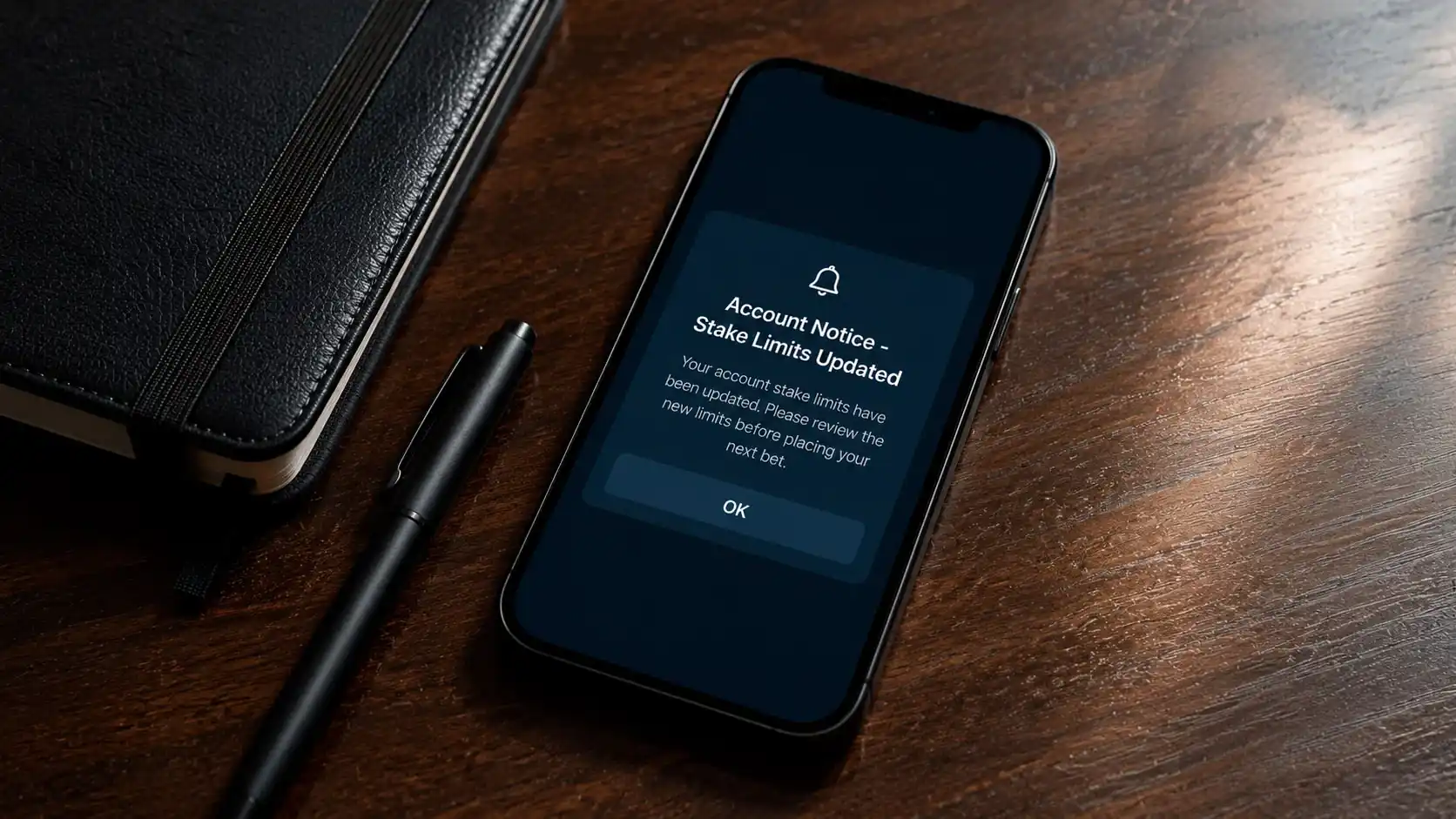
I know a UK NBA prop bettor – sharp, disciplined, in profit over several years – who logged into his main book one Tuesday and found his maximum stake on first basket markets had been silently reduced to £4. He had not been warned. He had not lost a court case or breached any rule. He had simply been a profitable customer for too long, and the operator had decided his business was no longer welcome at any meaningful stake. Account-level data from the UK Gambling Commission shows 4.31% of UK accounts were restricted for commercial reasons over a 12-month period, with many of those customers in profit.
Commercial restriction is the open secret of UK sports betting. It is legal, it is widespread, and it is the single most-discussed topic among UK NBA prop bettors who have crossed any meaningful sample size. The mechanism is simple: when an operator’s risk team identifies an account as consistently profitable, the operator reduces stake limits, removes promotional eligibility, sometimes closes the account entirely. The reasoning is commercial, not regulatory – and the regulator’s position is that operators are entitled to manage their commercial risk this way, provided they do not discriminate on protected characteristics.
This article covers what commercial restriction is, why prop bettors trigger it faster than any other category, how to detect it before your account stops working, what rights you have under UK law and licensing, and how the dynamic affects the broader UK NBA prop market. The piece is bluntly factual rather than reassuring, because the reality of UK sports betting at any meaningful skill level is that you will be restricted, and the question is when, not if.
What Account Restriction Means
Commercial restriction is not a single action. It is a category of operator interventions that reduce the value of your account to you while leaving it nominally open. The interventions span a spectrum from light to severe: stake reductions on specific markets, removal from promotional offers, exclusion from the higher-payout end of accumulator builders, manual approval requirement on every bet, full account closure with funds returned. The 4.31% figure from UKGC data captures the universe of these interventions across UK accounts in a 12-month sample window.
The most common form is the silent stake reduction. The operator’s risk system flags your account, and the maximum stake on the markets you typically bet – first basket, player props, same-game accumulators – is reduced to a level that makes profitable betting impractical. £100 maximum becomes £20. £20 maximum becomes £4. Sometimes the limit is set so low that it is symbolic rather than functional – £1 maximum stakes are not unheard of. The operator does not notify you. You discover the limit when you try to place a bet and the system refuses your stake.
Promotional exclusion is the second tier. Most operators run heavy promotional calendars – boost offers, bet-and-get, free-bet matches, accumulator insurance – and these promotions drive a meaningful share of the value the average UK bettor extracts. Restricted accounts are quietly removed from the eligibility lists. You can still bet, but you are betting at the standard price the model offers, without the promotional uplift the casual customer next to you is getting. The economics shift against you noticeably.
Why Prop Bettors Trigger Restriction Fastest
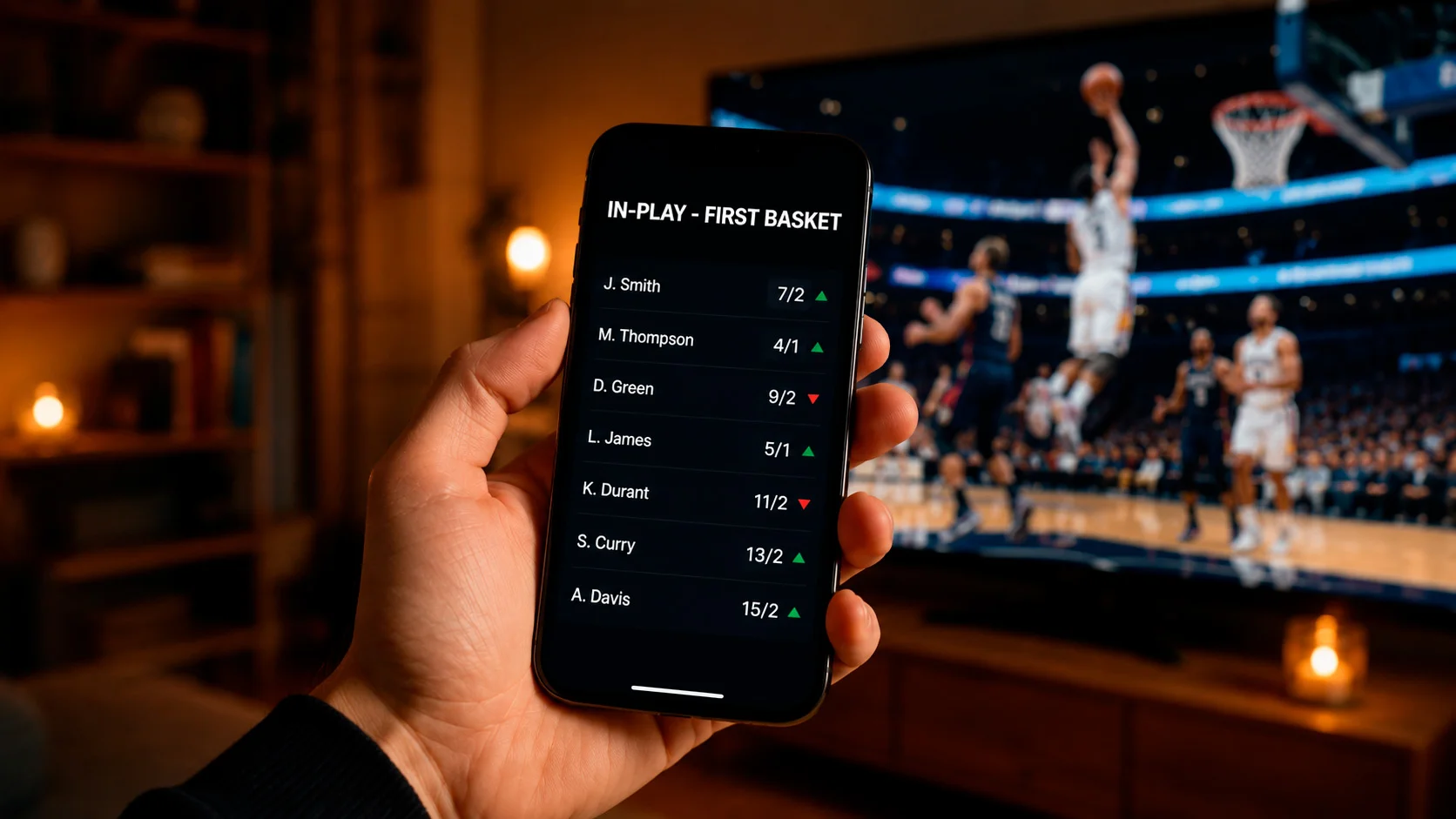
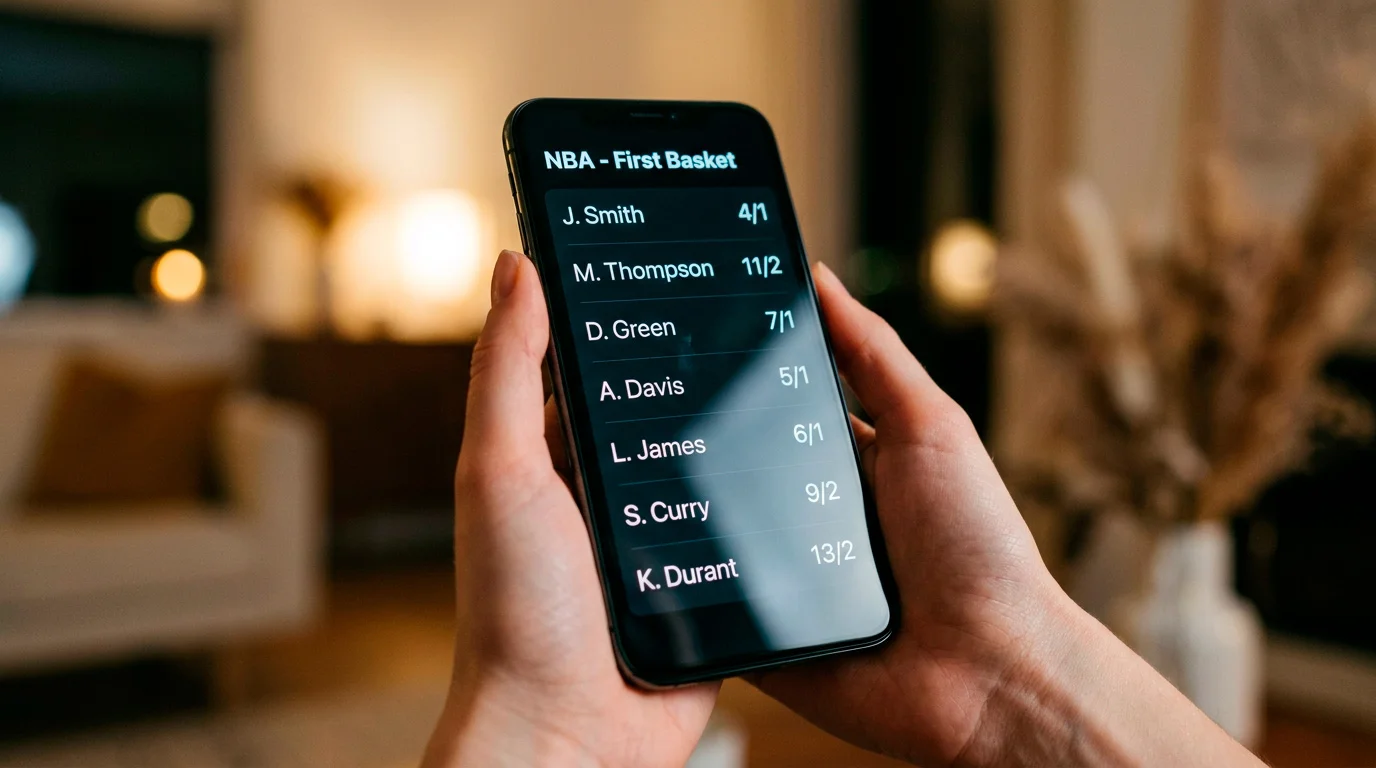
Prop bettors are the hardest customer category for UK operators to manage on a risk basis. The reason is structural: prop markets are individually small handle compared to football match-result or NBA spread markets, but they are pricing-sensitive and sharper bettors can extract value at high rates if the book has not priced them tightly. NBA first basket specifically is one of the most-watched markets by sharp bettors precisely because the data – tipoff history, first-shot share, usage rate – is publicly available and most UK books historically priced it more loosely than the data justified.
The restriction trigger happens fast on prop accounts because the operator’s risk system can identify pattern-based prop sharpness in fewer bets than it can identify, say, a sharp horse-race bettor. Five winning first basket bets in a row at 5/1 odds on relatively obscure players is a signal even if the absolute amounts are small. Twenty bets across two weeks with hit rates and prices that combine to a meaningful expected positive return crosses the operator’s risk threshold for review. Once the review fires, the restriction follows.
The other reason prop bettors trigger faster is that prop margins for the operator are thinner than they look. A first basket market with 25 selections and a posted overround of 8% sounds reasonable, but the actual exposure to a sharp bettor who consistently picks the underpriced selections drives the operator’s effective margin much lower. So the operator’s tolerance for sharp prop activity is lower than its tolerance for sharp activity on better-margined markets, and the restriction calculus runs faster.
I have personally seen accounts restricted after as few as fifteen first basket bets when the bets pattern-matched a known sharp profile. I have seen others run for a year of casual prop play without restriction because the betting pattern looked unsharp. The differentiator is rarely the absolute profit on the account; it is the pattern of bet selection.
How to Detect Restriction Early
The first indicator you have been restricted is usually the stake reduction itself, but if you watch carefully there are earlier signs. Promotional offers that everyone you know is receiving – “free bet on the next NBA fixture”, “boosted price on tonight’s first basket favourite” – start to skip your account. The push notifications that have been arriving daily go quiet. The home screen of the app stops showing personalised offers and starts showing generic content. None of these on their own confirm restriction, but the pattern across two or three weeks is diagnostic.
The second indicator is bet acceptance latency. When the risk system has flagged your account, every bet you place may be routed through a manual review queue rather than auto-accepted. You notice the delay: a bet that used to confirm in under a second now takes three or four seconds, or sometimes minutes. On in-play first basket markets, where the window is short, that latency can mean missed prices, voided slips, or the market closing before your bet settles. If you suddenly find your in-play submissions taking longer than they used to, the risk-review layer has probably been engaged.
The third indicator is the limit test. If you suspect restriction, place a bet at your normal stake on a market you would normally bet – first basket on a player priced 5/1, say – and observe the response. If the system rejects the stake and offers a lower one, you have been restricted. If it accepts, your account may still be in a watch state but is not yet limited. The test costs nothing if you size carefully and gives you confirmation faster than waiting for a notification that may never come.
What Rights UK Bettors Have
The UK legal and regulatory framework gives bettors fewer rights against commercial restriction than most other consumer relationships. Operators are entitled to refuse business to any customer at any time on commercial grounds, provided the refusal does not breach equality law or specific consumer protection requirements. The UKGC’s licence conditions require operators to act fairly and to provide reasons on request, but the meaning of “fair” in this context is closer to “non-discriminatory” than to “non-arbitrary”.
What you can do, in practice: you can ask the operator for the reason for the restriction, and they are required to respond, although the response may be vague (“commercial reasons” is a recognised acceptable answer). You can complain to the operator and escalate the complaint to the UKGC if you believe the restriction breaches their licence conditions. You can take the operator to the gambling industry’s alternative dispute resolution scheme. You cannot, in most cases, force the operator to lift the restriction.
The pragmatic response for most UK NBA prop bettors who have been restricted is to spread their activity across multiple operators from the start of their betting career, rather than concentrating with one and learning the lesson late. Six accounts, each running at modest size, each giving its own restriction signals, gives you a longer runway than one account where the restriction collapses your access to the market. The downside is that managing six accounts is more administrative work and more friction than running one, and the affordability check architecture has to be navigated separately at each operator.
The Illegal Market Context
The conversation about UK commercial restrictions sits inside a broader regulatory tension: when restrictions push skilled bettors out of the licensed market, they often migrate toward unregulated offshore sportsbooks that offer higher limits, looser restriction policies, and no affordability checks. The UK regulator is aware of this dynamic and treats it as a strategic concern. Approximately 290.03 million online bets on real events were placed monthly in the UK in 2025 – the bulk inside the licensed market, but a non-trivial share outside it.
The trade-off for the bettor moving offshore is that you exit the regulatory protection framework. The licensed UK market guarantees fund segregation, dispute resolution, fair trading practices, and identification of vulnerable customers. The offshore market offers none of those guarantees. So the choice is between a regulated environment that may restrict you commercially and an unregulated environment that will not – but where your funds are at counterparty risk and you have no meaningful recourse if the operator fails or refuses to pay.
For NBA first basket bettors specifically, the licensed UK market remains the right environment for almost all customers. The first basket markets at offshore operators are not noticeably better-priced than the licensed UK options once you adjust for the trust and funds-safety premium. Restrictions are an irritant, not a reason to leave the regulatory perimeter. The pragmatic approach is to spread accounts, accept the restriction inevitability, and treat each account as a finite resource.
The other side of the regulatory framework that interacts with restrictions is the affordability check infrastructure – different mechanism, similar timing, often combined effect on the same accounts. The £150 net spend threshold and the document-review escalation path that often runs alongside commercial restriction are worth reading in tandem, and I cover the mechanics in financial vulnerability check for NBA bettors.
Restriction as a Career Stage, Not a Setback
Restriction is best treated as a career stage rather than a personal setback. Every UK bettor who is profitable across a meaningful sample will be restricted somewhere. The successful long-run UK prop bettor accepts the dynamic, plans accounts and stake distribution accordingly, and continues to operate inside the regulated market with a portfolio of accounts at varying restriction levels. The unsuccessful one fights every restriction, treats each one as personal injustice, and either burns out or migrates offshore – usually both.
The UK NBA prop market has not been broken by the restriction framework. It has been shaped by it. The bookmakers who survive are those who can balance product attractive enough to bring in volume against risk management tight enough to control sharp loss, and the bettors who survive are those who can extract edge across multiple accounts before the risk teams catch up. It is a slow game, and the £4 stake limit on a once-trusted account is part of the rules.
Can I appeal a commercial restriction on my UK betting account?
You can ask the operator to review the restriction and you can escalate to the UK Gambling Commission if you believe their licence conditions have been breached, but commercial decisions to restrict accounts on business grounds are within operator discretion and rarely overturned. Most appeals do not succeed, although operators occasionally lift restrictions after a cooling-off period.
Does opening a new account at the same operator after restriction work?
No. UK operators run identity verification and KYC on every new account, and the systems will identify you as the same individual through name, address, payment method, and IP markers. A new account at a restricted operator will be linked to your existing record and the restriction will apply automatically.
Created by the ”nba First Basket Bets” editorial team.