UK Gen-Z NBA Betting Trends: Mobile-First Bettors and the First Basket Market
 Available in US

The Audience That Did Not Exist a Decade Ago
The first time I covered NBA props for UK accounts, the audience was niche, expat-heavy, and mostly male over thirty-five. That was twelve years ago. The audience now is not just bigger – it is structurally different. 57% of UK respondents who watch the NBA are under 35 years old, the highest share among the six major markets surveyed by S&P Global Kagan. That demographic is not a fringe of the audience. It is the audience.
What that means for the prop market is more important than the headline number. A bettor under 35 in the UK in 2026 is mobile-native, streaming-default, and has spent their formative years inside a media environment where social clips and short-form content shape which players they care about. They do not bet the way the older generation bets. They bet smaller, more often, more impulsively, and they bet on names rather than on closing prices. The first basket market – which is name-driven, attention-driven, and built around individual players – is the prop most aligned with how this demographic engages.
This piece looks at what the data actually says about the UK Gen-Z NBA bettor, where this audience came from, what channels they use, how their behaviour shapes bookmaker product, and what the regulatory environment means for them specifically. The audience is real and it is not slowing down. Anyone serious about UK NBA prop betting needs to understand it because either you are part of this demographic or you are competing against the bookmaker products built for it.
The EY Engagement Index Finding
The headline data point comes from EY-Parthenon. Basketball jumped seven places to 13th in the Sports Engagement Index 2025 and ranked sixth among UK Gen-Z adults aged 18-24. Seven places of movement in a single index year is unusual. Seven places driven by a single demographic – Gen-Z – is more unusual still and tells you the engagement is not coming from broad-base UK sport audiences shifting; it is coming from a specific younger cohort moving into basketball as a primary fandom.
What jumping to 13th overall really means is that basketball has overtaken several traditional UK sports in engagement among the under-35 demographic. The sports it has overtaken in that age band include some of the historically central UK fan disciplines. The implication for prop betting markets is direct: a sport that ranks sixth among 18-24 year-olds in engagement is going to drive prop volume in line with that ranking once that cohort ages into prime betting years, not in line with basketball’s historic position as a niche UK sport.
The EY data also picks up on the underlying drivers – digital content consumption, live event experiences, and social media engagement around the league. Each of those drivers reinforces a fan profile that is mobile-first and impulse-led, which is exactly the profile that drives single-game prop bets rather than long-term season position bets. First basket sits at the centre of that prop appetite.
UK Audience Snapshot
The headline numbers from the S&P Global Kagan Consumer Insights survey paint a clear picture. In the UK, 7% of internet adults reported watching NBA games – the lowest share among the six markets surveyed across the US, UK, Germany, France, Italy, and China. So in absolute terms the UK audience is small. But of that 7%, 77% of UK basketball fans watch NBA, which means basketball fandom in the UK is heavily NBA-coded – there is no rival domestic league commanding the share of attention that the Premier League pulls in football.
The age skew is the data point that matters for prop markets. 57% of UK NBA viewers are under 35. That share is higher than any of the other surveyed markets, including the US itself. The reason is structural: the UK audience came to NBA late, came to it through digital content, and the older UK sports demographic has stayed loyal to football, rugby, and cricket. So the NBA audience in the UK skews young by survey-default rather than by anything the league has done specifically.
The other piece of the demographic snapshot – gender – sits around 52% male in the UK NBA viewer base, which is more balanced than most UK sports audiences. The combination of young, urban, mobile, and gender-balanced is unusual in UK sports betting demographics and is part of why bookmakers have been pricing NBA prop product upward in priority over the last three years.
Mobile as the First Channel
For a Gen-Z UK bettor, mobile is not the primary channel. It is the only channel. Desktop usage in the under-25 bracket has fallen to a level where bookmaker product roadmaps have to assume a small mobile screen as the only interface a meaningful share of the audience will ever see. That has implications for first basket markets that go beyond UI.
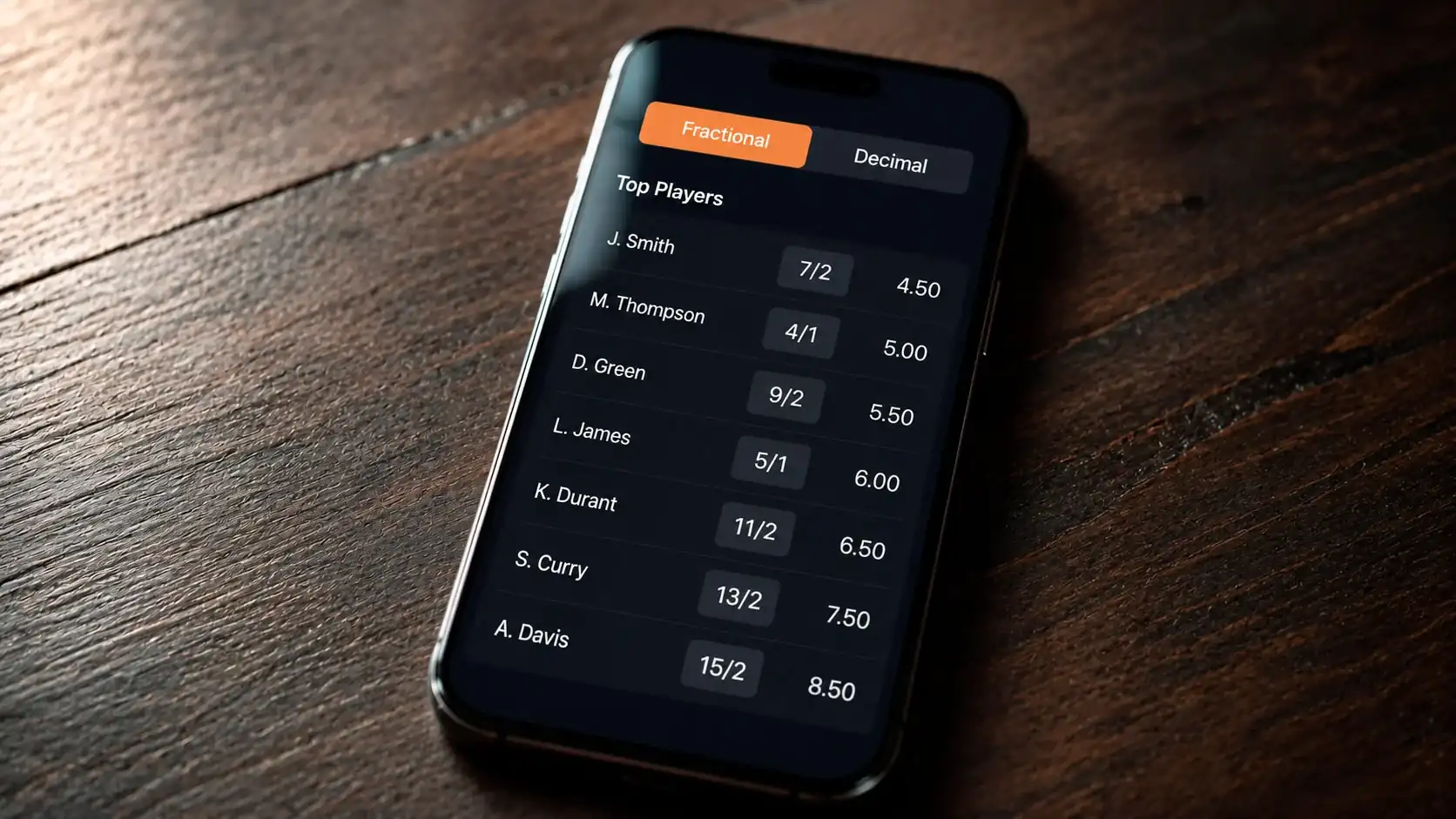
A first basket market on a mobile screen lives in a list of player names with prices next to them. The user scrolls, taps, confirms. The whole interaction takes thirty seconds. There is no comparison shopping across books in the way an older bettor might do across two desktop tabs and a notepad. There is no time spent on stat research, because the same screen is also showing a live stream, and the bettor is splitting attention three ways. The cognitive budget for a single first basket bet is closer to thirty seconds than thirty minutes.
What that does to bet selection is push the audience hard toward stars and big names. The first basket market on a mobile screen rewards the player whose name is recognised on the scroll, not the role player whose tipoff data and first-shot share data make them genuinely good value. UK Gen-Z first basket handle skews heavily toward star players, even when stars are priced poorly relative to their actual first basket probability. That is structural mispricing – but it is the kind of mispricing that books exploit, not the kind that bettors can.
How This Changes Bookmaker Product
The Gen-Z mobile-first profile has reshaped how UK bookmakers build NBA product. Six years ago, the NBA prop section on most UK books was an afterthought – three or four markets, often only on marquee games, often with one or two-day delays before settlement. Now the same operators offer dozens of NBA markets per game, real-time settlement, in-play first basket, same-game accumulators with first basket as a feature leg, and dedicated NBA promotional pages that match the visual language of football promotions.
The product evolution has been driven by handle data. When operators see that NBA prop handle is growing 30%-plus year-on-year and that the growing handle is concentrated in 18-34 demographics, the product roadmap reorders. Football still pays the bills, but NBA is the growth segment, and growth segments get product investment. First basket specifically has benefitted because it is the prop with the lowest cognitive overhead – pick a player, hit submit – and therefore the prop that maps best to a mobile-first impulse-led audience.
The other product feature this audience has driven is bet personalisation. Younger UK bettors are more receptive to personalised promotions, push notifications around favourite teams, and recommended-bet features that pre-populate selections. These features are operator-side competitive battlegrounds because they directly drive Gen-Z retention. The downside, from a bettor perspective, is that personalisation pushes you toward the bookmaker’s preferred markets, not toward your edge. A push notification telling you “your top pick has 5/1 on first basket tonight” is not a signal of value – it is a marketing tool.
Regulatory Implications
The regulatory environment around UK Gen-Z bettors is more aggressive than for any previous demographic, and the dynamics matter for how the first basket market will look over the next few seasons. Online gambling participation in GB stood at 39% of adults in October 2025, with 16% participating once you exclude lottery-only players. Inside that 16% the under-35 share is the segment regulators have been scrutinising hardest.
Several pieces of recent regulation specifically affect this demographic’s prop betting behaviour. The financial vulnerability check threshold of £150 net spend over 30 days, the 10x wagering cap on bonuses introduced in January 2026, the cross-product bonus restrictions, and the heightened affordability scrutiny on accounts opened by under-25s all combine to change how this audience can interact with first basket markets. A young UK bettor placing five £20 first basket bets across a week is now well into the territory where the operator will be running checks. That is not theoretical – it is automated.
The implication for the market is that Gen-Z first basket handle, while growing in absolute terms, is being constrained per-account in ways that earlier demographics never experienced. The operators have responded by trying to broaden the audience – get more accounts in at smaller stake levels – rather than trying to extract more from existing accounts. That is, from a long-run perspective, a healthier market dynamic, but it does mean that the £20-stake first basket bettor is the volume target, not the £200-stake one.
The regulatory shifts and the demographic shifts feed each other. The London game in January 2026 was a concentrated example of how UK Gen-Z NBA fandom expresses itself in event attendance and prop volume – that single fixture is worth understanding alongside the broader trend, and I have written a market post-mortem in NBA London game prop market impact that covers what the night specifically did to liquidity and pricing.
Reading the Market the Younger Audience Built
If you are a UK first basket bettor of any age, the Gen-Z shift matters because it has set the rules of the market you are betting into. The product is built for them. The pricing reflects their handle patterns. The promotional calendar – including the heavy push around London games and Prime Video tentpole nights – is keyed to their consumption habits. Whether you are 22 or 52, you are betting in a market shaped by the under-35 demographic.
The strategic implication is that the value in UK first basket markets sits where the Gen-Z audience is not paying attention. Quiet Tuesday-night Eastern Conference games. Role players with strong tipoff data and weak name recognition. Coaching tendencies on opening sets that the live model has not weighted heavily. None of these are the bets that get pushed in operator notifications or shared on social. All of them are where the books’ margins are thinnest, because the casual handle is somewhere else.
Why is the UK NBA audience so much younger than other UK sports audiences?
The UK NBA audience came to the league through digital content, social media clips, and streaming rather than through traditional broadcast. Older UK sports fans were already loyal to football, cricket, and rugby, so the NBA growth has been driven almost entirely by under-35 viewers entering basketball fandom from scratch.
Do UK Gen-Z bettors actually win more on first basket bets than older demographics?
No – handle data suggests Gen-Z first basket bettors lose at higher rates than older bettors, primarily because they bet on stars at compressed prices, do less cross-book price comparison, and react faster to in-play windows where the model has the edge. The audience drives the market but does not consistently beat it.
Prepared by the nba First Basket Bets editorial staff.