Playoff First Basket Betting: Why Tighter Rotations Reshape the Opening Possession
 Available in US
The conference semifinals when my regular-season model collapsed
I had a regular-season first basket model that ran at 4-5% positive expected value across two seasons. When the playoffs started in 2023, I rolled the model into the postseason without adjustment and lost 11 bets in 14 over three weeks. The model wasn’t broken. The market it was pricing had changed. Playoff rotations tighten, opening-play scripts get more aggressive, defensive coverages tighten, and the variance on individual first basket conversion rates compresses sharply. The same player who was 17% likely in February is now 22% likely in May, and the operator’s line has moved with it. My model had not.
Playoff first basket betting is not regular-season first basket betting at slightly higher stakes. It is a structurally different market with different mechanics, and treating it as a continuous extension of the regular season is the most expensive mistake a UK prop bettor can make in April. The good news: once you understand how the playoff dynamics shift, the pricing adjustments are predictable enough that you can rebuild your model for postseason use.
What I want to walk through here is how playoff rotations actually tighten, the star-share effect on first basket conversion, the referee-tendency change between regular season and postseason, the defensive adjustments that show up by Game 3 of any series, and how UK bookmakers respond to all of this in their playoff first basket pricing. The objective is to give you a working playoff overlay for whatever first basket model you use during the regular season.
How playoff rotations tighten – the math behind the change
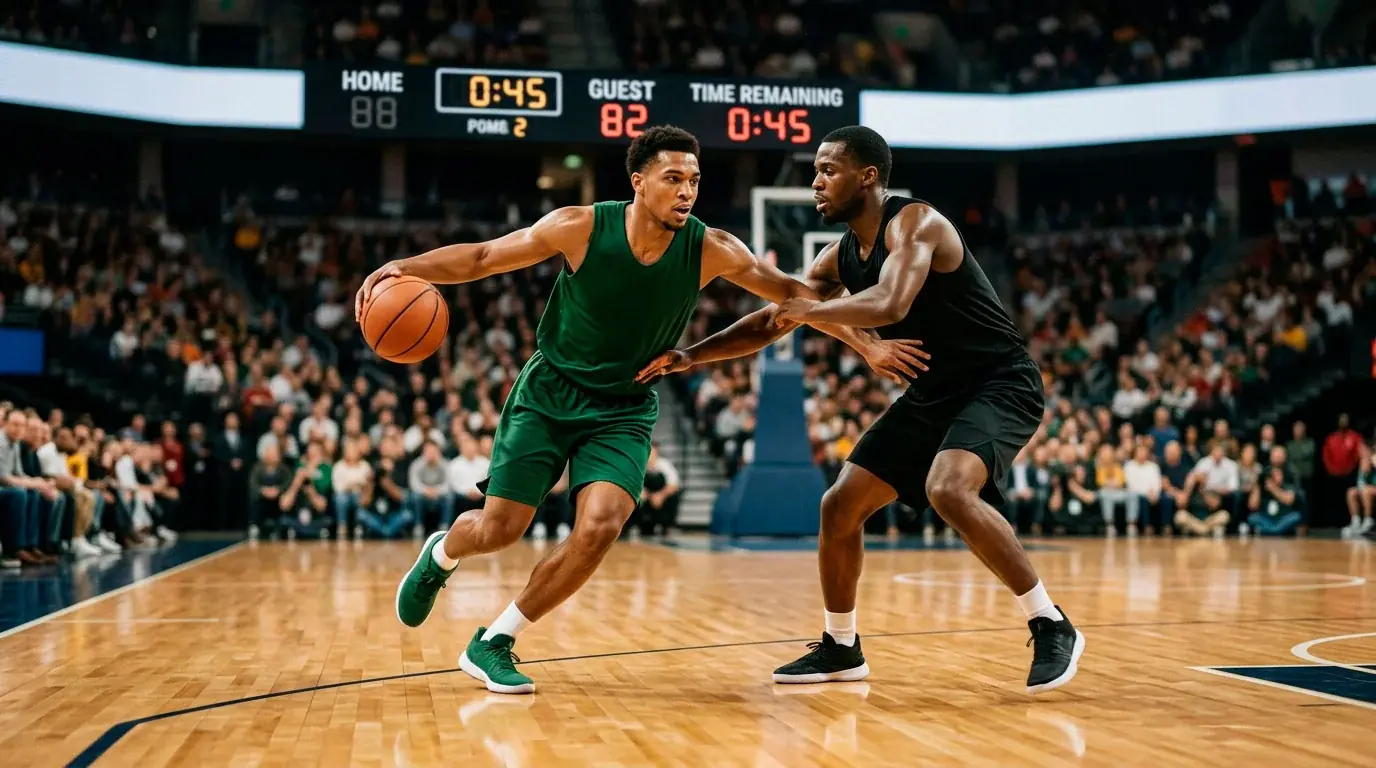
Playoff coaches shorten their rotations. A regular-season team uses 9-11 players in meaningful minutes; a playoff team typically uses 7-9, with the worst three or four bench players getting either zero minutes or token garbage time. The result is that the players who are on the floor at tipoff are the team’s seven or eight best players – not the team’s typical regular-season starting five plus role-player rotation.
The implication for first basket modelling is straightforward. The starting five at the tipoff of a playoff game is more concentrated in the team’s highest-usage talent than the regular-season equivalent. Coaches push their best opening-possession scorer onto the floor for the tipoff, and the starting five often includes a higher-usage second-tier player who would have come off the bench in February.
This compresses the first-shot share distribution. The top player on a playoff team takes a higher percentage of his team’s first shots than the same player did in February – sometimes by 3-5 percentage points. That compression is invisible in regular-season data but very visible in playoff first basket markets, and operators that update their models in time price tighter on the top player. Operators that lag the change leave value on the table for two or three games before the line moves.
The star-share effect on first basket conversion
The data point that makes this concrete: in a 2025-26 playoff game preview, Victor Wembanyama showed a 20.7% first-basket rate across 58 starts. That 20.7% is the postseason-context rate, not the regular-season equivalent. Wembanyama’s regular-season FB% across the same season would have been somewhere around 16-18% – meaningfully lower. The 3-4 percentage point bump is the playoff star-share effect: the Spurs script their opening play more aggressively around their best opening-possession scorer in the playoffs than they did in the regular season.
This pattern shows up across most playoff teams. The top player’s FB% rises in the postseason because the team funnels opening possessions to him with higher consistency. Conversely, the role-player FB% compresses – the third or fourth name on the regular-season leaderboard for that team essentially disappears from the playoff first basket market because his opening-possession touches have been redistributed to the star.
The pricing implication: in the regular season, you can occasionally find value on a tier-two name whose opening-possession touches are higher than the operator’s model assumes. In the playoffs, that tier-two name almost never carries value because the playoff scripts redistribute his touches to the star. The playoff first basket market is a star-only market for the first two or three games of each series.
Referee tendencies in playoff games
The other shift is on the officiating side. Playoff referees call the game differently than regular-season referees. Fewer fouls in the first three minutes, more physical contact allowed, more leeway for star players in particular to draw bumps without picking up calls. The result is a noticeably lower rate of free throws in the opening sequence – which means the first scoring event is more likely to be a field goal than during the regular season.
For first basket bettors, this is good news in one specific way: the number of times a free throw resolves the first scorer market before any field goal lands is lower in the playoffs. The rule difference between first basket and first scorer matters less because fewer playoff games have early free-throw scoring.
The flip side is that physical defence in the playoffs increases the variance of opening possessions. A possession that would have been a clean catch-and-shoot in February becomes a contested, off-balance shot in May because the defence is closing harder. So while early free throws are rarer, missed first shots are more common, which extends the resolution time of the first basket market and gives the operator more time to adjust the line if it has been mispriced.
Defensive adjustments to opening plays
By Game 3 of any playoff series, the defending team has identified the offence’s opening-play script and prepared a specific counter for it. This is where the regular-season script breaks down. The play that was the team’s automatic Game 1 opener is no longer effective by Game 3, and either the offence has adjusted or the script has been disrupted.
Some coaches are quicker than others to change their opening play in response. The best playoff coaches install three or four opening-play options before the series starts and rotate between them based on what the defence shows. The less adaptable coaches stick with their regular-season opener and watch it fail repeatedly until they switch – sometimes losing the entire series before they make the change.
From a betting perspective, the implication is that you cannot use the same first-shot-share data through an entire playoff series. The data from Game 1 may not apply by Game 3. You need to update your model after each game based on what the defensive adjustment is doing to the opening play. This is much more intensive than regular-season modelling, and it is partly why first basket betting is harder in the playoffs even when the math feels familiar.
How UK bookmakers behave in postseason
UK operators handle playoff first basket pricing more conservatively than regular-season pricing. The vig widens – overround on a playoff first basket market is often 120-128% versus 115-122% in the regular season – because the operator’s confidence in the model is lower and the safety margin must be wider.
The volume per fixture is also higher. 170 million people in the U.S. watched NBA games in the 2025-26 regular season – the highest 24-year figure and an 86% increase year-on-year – and the postseason concentrates that volume into a smaller number of fixtures, which means more bet flow per game and more pressure on UK operators to keep their lines tight. The combination of higher volume and wider vig creates an unusual dynamic: the prices are less aggressive, but the volume is large enough that even small inefficiencies attract sharp money quickly.
For the UK bettor, the practical implication is that early playoff lines (Game 1 of any series) are where the inefficiencies live. By Game 2 the operators have updated their models with whatever the Game 1 opening sequence revealed, and the prices reflect the playoff-context FB% rather than the regular-season number. Second-half first basket markets in the playoffs are even more inefficient because the halftime adjustments are more aggressive in postseason than in regular-season games.
Why does my regular-season first basket model fail in the playoffs?
Because playoff scripts compress the first-shot share distribution toward the top player, and defensive adjustments by Game 3 disrupt the opening-play script. The regular-season FB% data underweights the star and overweights the role players relative to playoff reality. Without rebuilding the model for postseason use, you are betting on outdated probabilities.
Are NBA playoff first basket prices more efficient than regular-season prices?
On average, no. UK operators widen vig in the playoffs because their confidence in the model is lower. The volume per fixture is higher, but the prices are less aggressive. The biggest inefficiencies are concentrated in Game 1 of each series, before operators have updated their models with playoff-context data.
Prepared by the nba First Basket Bets editorial staff.