Prime Video and the NBA in the UK: How Streaming Reshapes the First Basket Audience
 Available in US
The December Night Streaming Caught Up With Linear
The first exclusive Amazon Prime Video NBA Cup Final aired in December 2025 and averaged 3.07 million viewers – a 3% increase over the 2024 championship that had aired on traditional channels. Three million viewers for an NBA event in the UK, on a streaming platform, on a December night. That is the moment the streaming-first NBA audience stopped being a hypothesis and became measured fact, and that is the moment UK first basket prop betting infrastructure had to start treating streaming as the primary distribution channel rather than a complementary one.
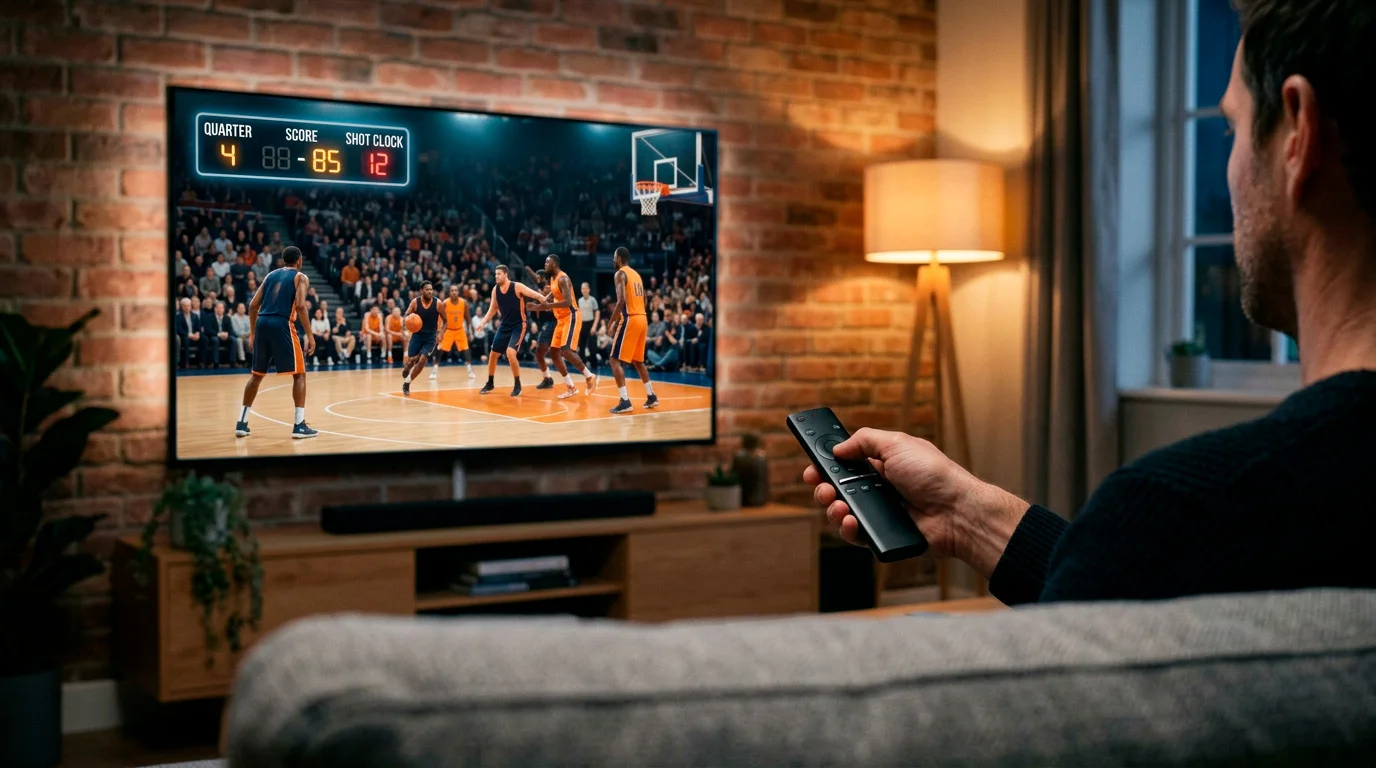
The 3.07 million figure matters less for its absolute scale than for the platform. Prime Video brought NBA basketball to UK living rooms via the same interface that delivers everything else they watch – same remote, same login, same viewing habit. For UK NBA bettors, that interface integration changes the rhythm of how a game gets watched and bet on. The phone is in hand the whole time. The bookmaker app is one tab over. The friction between watching the action and engaging with the live first basket market collapses to seconds.
This piece is about that shift. The NBA Cup Final that proved the model, the London Game broadcast that extended it, the comparative numbers between linear and streaming UK NBA audiences, how streaming changes bet timing across the first basket window, and where the future broadcast deals are heading. The thesis is simple: streaming is not a packaging change. It is a behavioural change in how UK NBA prop betting works at the user level, and the books are still adapting.
The NBA Cup Final 2025
The 3.07 million average viewers number was not a flash event. It represented a 3% increase over the 2024 championship and was the headline moment of Prime Video’s first full NBA Cup Final exclusive in the UK. The growth from 2024 to 2025 is the part that matters strategically – UK NBA viewership for the same tournament event grew while transitioning from a more traditional distribution to a streaming-first one. Streaming did not cost audience. It added it.
The tournament format itself helped. The NBA Cup, with its compressed bracket structure and clearly defined stakes, plays well on streaming because it does not depend on viewers who have followed an entire season’s narrative. A streaming audience can engage with a tournament moment and walk away with the experience intact. The Cup Final’s broadcast on Prime Video was, in effect, the test case for whether NBA event content could thrive on UK streaming, and the test passed.
For prop bettors, the Cup Final established the volume baseline for UK NBA streaming events. If a single tournament final draws 3.07 million UK viewers, then a London regular-season game with similar marketing investment can be expected to draw a comparable or larger audience, because the London format has the home-market premium baked into the proposition. The market liquidity figures from these events flow directly from the broadcast audience figures.
Prime Video London Game Broadcast
The 18 January 2026 NBA London Game between Memphis and Orlando provided the second major UK Prime Video NBA tentpole, and the data tells a clear story. Memphis defeated Orlando 126-109 at The O2 in front of more than 18,000 fans, and the broadcast became the most-watched NBA Global Game ever in the UK. The combination of in-arena spectacle and Prime Video distribution produced an audience figure that surpassed every previous NBA Global Game broadcast in the UK market.
The two-format strategy – exclusive global event content like the Cup Final paired with marquee regular-season events like the London Game – is what positions Prime Video to drive the next phase of UK NBA audience growth. Each tentpole event extends the viewing habit. The Cup Final teaches UK viewers to expect Prime for NBA Cup. The London Game teaches them to expect Prime for premium regular-season events. The next stage, which has been signalled in industry coverage, is for Prime to extend toward more regular-season content, which would shift UK NBA viewing from event-driven to routine.
For UK first basket prop betting, the implication of the Prime model is volume concentration on tentpole nights. The Cup Final and the London Game produce dramatic spikes in UK NBA prop handle compared to typical regular-season nights. Bookmakers pricing those nights have to adjust for both the audience size and the audience profile – heavier representation of casual fans, heavier concentration of bets on stars, more in-play handle, faster repricing. Prime nights are pricing-tight nights for first basket markets.
Streaming vs Linear UK Numbers
The wider context for understanding the UK Prime effect is the global NBA viewership picture. More than 1.3 billion total hours of live NBA game coverage were consumed globally on linear and streaming platforms in 2025-26, excluding NBA League Pass – a figure up 93% year-on-year. The 93% growth is the headline that captures the shift: NBA viewership is roughly doubling globally year-over-year as the streaming distribution model spreads, and the UK is one of the markets where that doubling is happening fastest.
Inside the UK specifically, the streaming-versus-linear split has been moving steadily toward streaming over the last three years. Sky Sports remains a significant linear distributor, particularly for the broader regular-season volume of NBA content, but the high-engagement event content has shifted toward Prime. The combined effect is that UK NBA viewing is growing on both platforms but the growth rate on streaming is meaningfully higher, and the under-35 demographic that drives prop betting volume is concentrated disproportionately on the streaming side.
The audience profiles between Sky linear viewers and Prime streaming viewers are not identical. Sky’s NBA audience tends to be older on average, with longer-term basketball fandom histories, and bets across a more diverse range of markets when engaged with prop betting. Prime’s NBA audience is younger, more streaming-native, more mobile-first, and the prop bets placed during Prime broadcasts skew heavier toward star players and toward in-play markets that engage during the live experience rather than during pre-game research.
How Streaming Changes Bet Timing
The behavioural shift around streaming is most visible in the timing distribution of UK first basket bets. On a typical linear NBA night, the bulk of UK first basket handle comes in during the 30 minutes before tipoff, with a smaller spike in the 5 minutes immediately before. On a Prime Video NBA night, the handle distribution shifts toward later – more handle is placed in the final minutes before tipoff, and a meaningfully higher share of total first basket-related betting volume is in-play handle placed after tipoff during the live possession.
The mechanism is simple. A linear viewer is committed to the broadcast in advance – they have settled in, they have done their pre-game research, they have placed their bets. A streaming viewer arrives at the broadcast through a more fluid pathway – they see a notification, they tap into the stream, they realise the game is starting, and they bet with the seconds rather than the minutes available. The streaming-native bet is later, smaller, and more impulse-driven than the linear-native bet.
This shift has product implications that UK operators are still working through. The pre-game first basket market on Prime Video nights is structurally smaller as a share of total handle than on linear nights, while the in-play first basket market is structurally larger. Operators who built their NBA prop product around the linear-night handle distribution are having to rebalance their pricing models, their promotional calendars, and their interface flows to capture the streaming-night distribution shape.
For the individual UK first basket bettor, the implication is that the value windows on Prime Video nights are different. The pre-game prices may be slightly looser because the casual-handle volume on those nights is shifted toward in-play, leaving the pre-game market less competitively priced than the in-play one. Conversely, the in-play first basket window is heavily contested on Prime nights, and edge there is harder to extract than on quieter linear-only fixtures.
Future Deals Context
The UK NBA broadcast landscape will continue to fragment over the next several years. Industry signals point toward more streaming-platform competition for NBA content rights – not just Prime Video but other major streamers extending their sports portfolios – and the league’s broader rights cycle is moving toward distribution models that segment audiences across linear and streaming partners by event type. UK fans should expect more platforms holding pieces of NBA content, with the highest-profile events going to streaming and the broader regular-season volume staying mixed.
The strategic implication for UK NBA prop betting markets is that operator product needs to handle multi-platform audience integration. A bettor’s NBA viewing pattern in 2027 will likely involve switching between Sky, Prime Video, and possibly a third platform within a single week of fixtures. The bookmaker app needs to function as the constant – the place where the bet is placed regardless of which platform is delivering the broadcast. Operators that integrate across viewing experiences will retain the streaming-native audience better than operators tied to traditional linear-broadcast handle patterns.
Simon Mantell, EY’s Sports Industry Sector Lead UK&I, framed the structural growth driver clearly: “The rapid growth of Basketball among Gen-Z, driven by digital content and live experiences, underlines the importance of innovation in fan connection.” The streaming distribution model and the digital content ecosystem around it are the engines behind that growth, and the UK NBA prop market is one of the downstream beneficiaries of the broader fan-engagement shift.
The streaming audience profile feeds directly into the broader Gen-Z NBA betting population, which is the larger demographic shift underneath all of this – the way younger UK bettors approach prop markets is shaped by exactly the streaming-native viewing habits that Prime Video is normalising. I have written about the demographic dynamics in UK Gen-Z NBA betting trends, which provides the demographic backdrop to the broadcast story.
Streaming as the Default UK NBA Window
Streaming is no longer the disruption to UK NBA broadcasting. It is the default. Linear coverage will remain meaningful for years to come, but the growth, the high-profile events, the under-35 audience, and the prop betting volume are increasingly streaming-native. UK first basket bettors who are still mentally framing NBA broadcasting around Sky Sports’ coverage are working with an outdated map.
The Prime Video model – exclusive event content paired with broader NBA programming as it rolls out – is going to set the rhythm for UK NBA viewing for the foreseeable future. The first basket prop market lives downstream of that viewing rhythm. The bettor who reads the broadcast schedule, understands which platform is carrying which event, and adapts their pre-game and in-play strategy to the platform-specific handle pattern will operate with a structural edge over the bettor who treats every NBA night as identical.
Will UK NBA broadcasts move entirely to streaming over time?
Probably not entirely, but the high-profile events will increasingly sit on streaming platforms while linear keeps a share of broader regular-season coverage. The two-format split – streaming for events, linear for routine – is where most signals point.
Does Prime Video allow live betting integration during NBA broadcasts in the UK?
Direct in-broadcast betting integration is not currently a feature of Prime Video’s UK NBA coverage, although the visual presentation does include odds-related contextual information for some content. Live betting during Prime broadcasts is done through a separate sportsbook app, with the broadcast running on the same device or a paired one.
Written by the editors at nba First Basket Bets.