NBA London Game Prop Market Impact: Why O2 Tipoff Shifts Liquidity
 Available in US

One Saturday in January, The O2 Was a Different Market
I sat in the upper bowl at The O2 on 18 January 2026 watching Memphis put away Orlando 126-109, and what struck me – beyond the obvious oddity of NBA basketball at 6pm UK time – was how much my phone was buzzing with first basket activity. Friends who never normally text about NBA props were asking who I had on the opener. Whatsapp groups that usually go dark for NBA were lit up with screenshots of odds. The match was the 19th NBA game on UK soil since 1993 and the 10th regular-season game in London, and from the bookmaker side it was the highest-engagement NBA prop night of the year for UK accounts.
The tipoff went 6:00pm GMT, an hour the UK NBA market never normally sees. The crowd hit 18,000-plus, the broadcast became the most-watched NBA Global Game ever in the UK, and the props market behaved nothing like a typical Tuesday-morning regular-season game where most UK bettors are stealing five minutes before bed. Liquidity was thicker, the spreads tighter, and the in-play volume was – by every operator I spoke to off-record – multiples of a normal NBA night.
This article is a market post-mortem of that game and a forward look at what UK bettors should expect from future London games. Why the O2 schedule moves liquidity, how UK books priced the night, what the engagement numbers say about the audience, and the trade-off between thicker liquidity and thinner edge that comes with a marquee event. The London game is unusual not because it is a single event but because it concentrates a year of latent UK NBA interest into one tipoff.
The 2026 London Game Summary
The mechanics: Memphis Grizzlies versus Orlando Magic, regular season fixture, played at The O2 in front of more than 18,000 fans. Final score 126-109 to Memphis. The broadcast, carried by Prime Video as part of their growing UK NBA package, became the most-watched NBA Global Game ever in the UK – that is the formal claim from NBA and Prime Video data, and it tracks with what I saw in social engagement that night and the morning after.
The historical bookkeeping matters because it shows how this format is being institutionalised. The 2026 game was the 19th NBA game in the UK since 1993 and specifically the 10th regular-season game in London – meaning the format has shifted from one-off exhibition curios in the early 90s and 2000s to a regular, scheduled regular-season presence. That regularity changes the prop market. A one-off exhibition does not develop liquidity; a recurring regular-season fixture trains UK bettors to expect a London game and to plan around it.
From a pricing standpoint, the most interesting feature of the night was the lopsided final score combined with first basket markets that had priced both teams as roughly equal at tipoff. Memphis won by 17, but the first basket market closed with implied probabilities for Memphis players and Orlando players that did not look like a 17-point margin was being predicted. The pre-game line was a 4.5-point Memphis spread. First basket markets correctly do not key heavily off final spreads because the opening possession is a single play, but the night’s blowout did make the post-mortem on first basket pricing more interesting than usual.
Why O2 Tipoff Time Matters in the UK
The 6pm UK tipoff is the single biggest market shift in a London game. A standard NBA night has tipoff times stretching from 12:30am to 4am UK, which means UK bettors are placing pre-tipoff first basket bets in late evening or early morning, then either staying up or letting the bet settle in their sleep. That sleep filter is why UK NBA prop volume is structurally lower than it should be given the audience size – most casuals will not stay up.
A 6pm tipoff removes that filter. The match plays in prime time. Bettors who would never normally engage with a Tuesday-night NBA fixture are watching live, in front of the TV, with their phone in hand, and the live first basket market becomes a participatory experience rather than a fire-and-forget pre-bet. This is why London games concentrate liquidity: the format unlocks an audience that exists year-round but cannot normally engage at the right hour.
The ripple effect on first basket specifically is twofold. First, the pre-tipoff market is deeper because more casual money is in it – which compresses the prices, especially on the favourites. Second, the in-play first basket window has more volume than any normal NBA night, which means the live model is repricing faster and the windows for value reads are shorter. Both effects work against the skilled UK bettor: the pre-tipoff edge gets compressed, and the in-play edge gets eaten by faster repricing. London games are the worst night of the year to be looking for first basket value, and they are the best night of the year if you are a UK book.
How UK Books Priced the Game
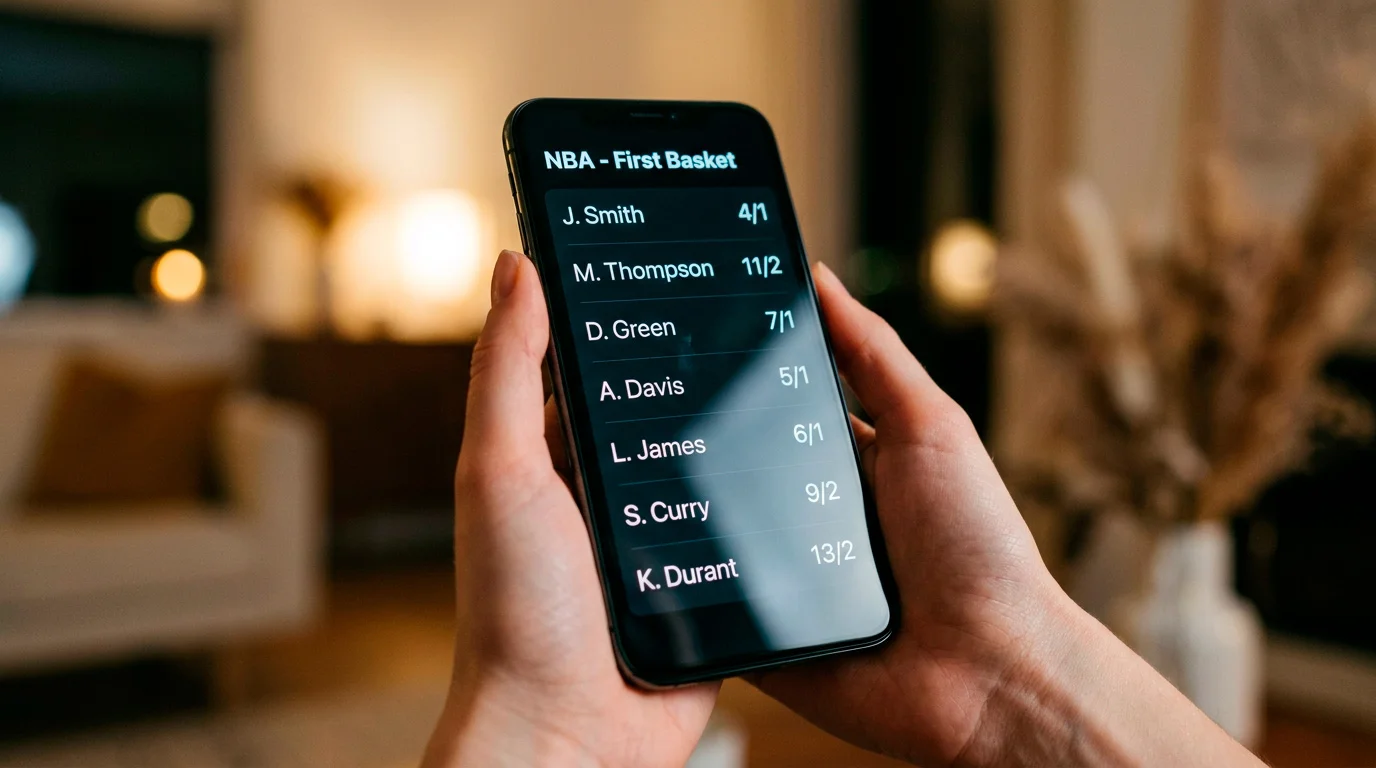
Across the UK operators I track, the pre-game first basket prices for the Memphis-Orlando London game were noticeably tighter than for an equivalent regular-season fixture. A Memphis-Orlando game in late January in Memphis would have first basket favourites priced around 11/2 to 13/2; the London game had several Memphis options at 9/2 and 5/1, and the corresponding Orlando big men were priced 6/1 to 13/2. The compression is real, and it is a function of the book balancing books against expected volume rather than expected outcome probability.
The other priced-in feature was a generally higher overround on first basket markets that night. Operators expecting heavier handle widen their margins because their risk management is more sensitive to popular favourites taking up disproportionate exposure. If 35% of the first basket handle on a typical NBA night is on five-six players, and on the London game that concentration jumps to 50%-55% on a known marquee player, the operator widens the margin to compensate. UK bettors who price-shopped across three or four books on the London game will have noticed the spreads were nearly identical – when books all face the same heavy public-side pressure, they all widen at roughly the same rate, and arbitrage opportunities collapse.
The in-play side is harder to assess from outside. What I observed was that live first basket prices moved within seconds of opening possessions and that the cross-book divergence I sometimes catch on a quiet Tuesday night was almost zero on the London game. Books were running on similar feeds, similar models, and similar handle pressure. The London game is, in pricing terms, the closest the UK NBA market gets to the kind of efficient mass-handle market that football enjoys all year.
Gen-Z Engagement Around the Event
The reason London games concentrate so much UK liquidity is demographic. Basketball jumped seven places to 13th in the EY-Parthenon Sports Engagement Index 2025 and ranked sixth among UK Gen-Z adults aged 18-24. Sixth – ahead of golf, ahead of cricket among that age band, ahead of most of what UK sport historically prides itself on. The London game is the moment when that latent Gen-Z basketball fandom converts to event attendance, social engagement, and – for the over-18 share – prop betting.
Walking through The O2 concourse before tipoff, the demographic split was strikingly young compared to a Premier League away crowd at a similar venue. Group sizes were small – twos and threes rather than family blocks – and the merchandise being worn was a healthy mix of the actual teams playing plus broader NBA franchises. The crowd was there for NBA the brand, not just Memphis or Orlando. That is exactly the audience profile bookmakers have been planning around for several years, and the London game is the one date in the calendar where the bookmaker product gets stress-tested against that audience at full strength.
For a UK bettor reading this for prop strategy: the implication is that the London game crowd’s bet selection skews toward stars and recognisable names. Memphis-Orlando is not a marquee matchup by NBA standards, but Ja Morant attracted heavy first basket handle on his name alone, and the same dynamic compresses prices on whichever well-known players are on the floor. If you can stomach betting against the public-side handle pressure on the London game, the underdog first basket lines have value precisely because the popular money is elsewhere.
Liquidity vs Edge Trade-off
Here is the trade-off in plain terms. Liquidity is good for executing a bet – wider markets, easier to get on at the price you want, less slippage. Edge is what generates positive expected value over time. The London game maximises liquidity and minimises edge for the same reason: every casual bettor in the country has tuned in. Markets get efficient when more people are in them.
For most UK bettors, the right approach to a London game is to enjoy it and bet smaller than usual. Treat the night as entertainment-priced rather than edge-priced. Stake a fraction of your normal first basket unit, accept that the prices are not in your favour the way they are on a quiet Wednesday night, and use the live experience to build feel for what you are watching. The actual money on first basket markets is made on the 78 other Tuesday-Wednesday-Thursday games where the public is asleep and the books are running thinner-volume markets with looser pricing.
One useful frame: the London game’s audience profile is the same audience profile that drives the broader UK Gen-Z prop market – the demographic shift toward mobile-first, streaming-native NBA viewers. Understanding that demographic matters for any UK first basket bettor planning around the rest of the season, and the dynamics behind the EY index ranking are worth unpacking in UK Gen-Z NBA betting trends, because the London night is a single concentrated expression of a year-round shift.
Reading London Games as a UK Bettor’s Calendar Marker
Going forward, the London game date should be a calendar marker for any UK first basket bettor – not because it is the night to make money, but because it is the night to read the market’s shape. Volume distribution, in-play behaviour, demographic engagement, the share of handle on stars versus role players. The data from a single London night gives you a snapshot of where UK NBA fandom is in a way that no other night does. That snapshot informs how you allocate effort across the year and where the actual edges live.
The expansion path is clear from the 19-game total since 1993 and the regular-season push since 2011. Future fixtures, possibly multiple games per season, possibly Paris-style exhibition formats, are on the horizon. Each one will be a high-liquidity, low-edge night. Plan accordingly.
Are first basket odds at NBA London games better than at standard NBA games?
No, generally worse. Higher handle and concentrated public money on stars compresses prices and widens overrounds. The pre-game first basket prices on the London game are typically tighter than the same teams would face on a standard regular-season night.
What time do NBA London games tip off in the UK?
Recent London regular-season games have tipped off at 6pm UK time on a Saturday or Sunday – early evening rather than the usual 12:30am-4am UK window. The earlier slot is the main reason London games attract heavier UK prop betting volume.
Written by the editors at nba First Basket Bets.