bet365 Sportsbook Systems: NBA first basket lines and rules
 Available in US
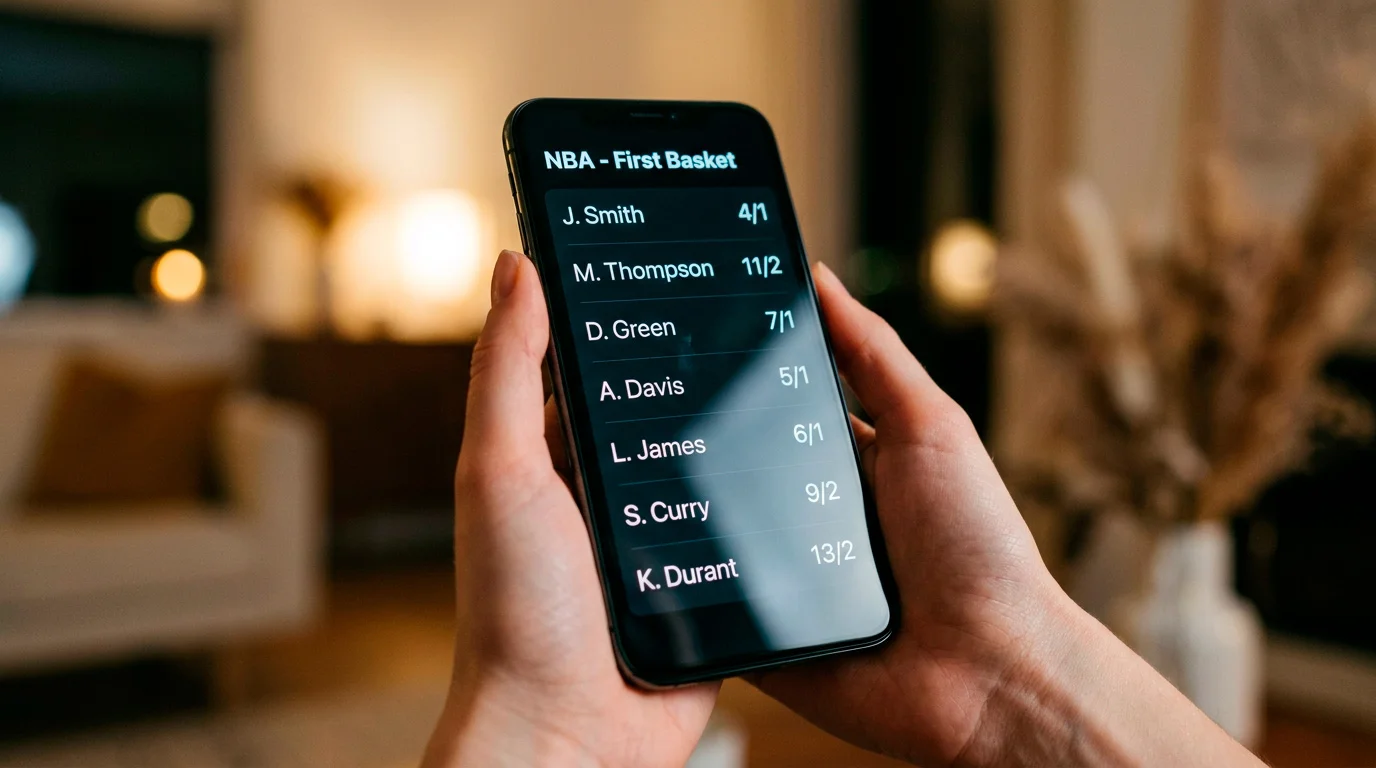
bet365 Basketball Lines: Evaluating Free-Throw Terms and Line Releases
I check bet365’s NBA first basket market before I check the weather. That sounds compulsive, but it is the consequence of two seasons of empirical observation: bet365 prices the market hours earlier than any other UK operator, and the early prices contain genuine inefficiencies that get corrected by the time the rest of the field opens. If you are not on the morning bet365 line, you are betting at the consensus price by Tuesday afternoon.
This article is not a promotional piece. I am not telling you to open a bet365 account or to deposit money. I am explaining the mechanics of one specific market on one specific operator, because understanding those mechanics is what separates a UK first basket bettor who shops prices effectively from one who clicks the first line they see. bet365 has a particular pricing pattern, a specific free-throw rule clause, an in-play first basket window that opens later than its rivals, and several settlement edge cases worth knowing about before they cost you a stake.
What follows is a forensic walkthrough of how bet365’s first basket market actually behaves – when the line opens, how the prices move, how the operator handles free throws and edge cases, and what the in-play window looks like in real time. If you have a bet365 account, treat this as a reference. If you do not, treat it as a comparison benchmark for whatever UK book you do use.
When the market opens and how deep it goes
bet365 typically opens its NBA first basket market roughly 20 to 26 hours before tipoff for regular-season games – earlier on showcase fixtures, occasionally later on the back end of a back-to-back when injury news is volatile. That early opening is part of the operator’s broader strategy of being first to market on as many props as the trading desk can sustain, and it is enabled by the scale of bet365’s UK operation. The total Gross Gambling Yield of the GB customer-facing gambling industry reached £16.8 billion in the year to March 2025, and bet365 captures a meaningful slice of that – which gives the trading desk the volume to absorb early-line risk that a smaller operator would not take on.
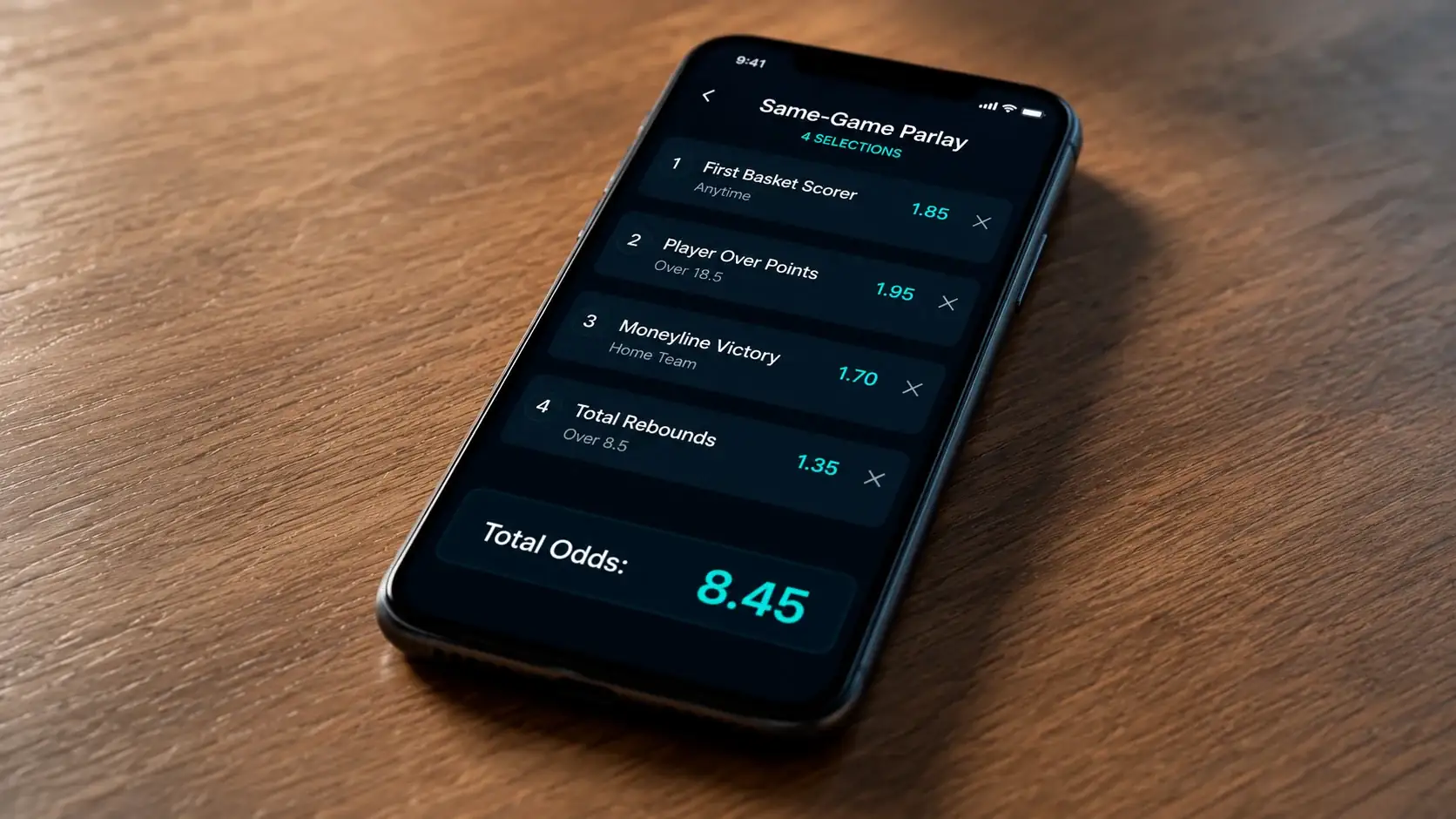
Market depth on bet365 is the most generous on the UK landscape. A typical regular-season fixture has 18 to 24 players priced individually, plus a “field” or “any other player” line covering everyone outside the listed group. Method-of-first-basket markets are listed for most fixtures – split into layup, dunk, jumper and three-pointer – and the rule paragraph for each is accessible through the help section without needing to contact support.
The early-opening pattern is double-edged. The advantage is that you can spot value before competing operators catch up. The disadvantage is that early lines are based on incomplete information – injury reports, starting lineups and referee assignments are not finalised until much closer to tipoff, and the early bet365 price reflects the trading desk’s best estimate at that moment rather than the settled state of the game. So early lines are also where the operator’s biggest pricing errors get made, in both directions.
The bet365 pricing pattern across the lineup
I have logged bet365’s first basket prices for two seasons, and the pattern is consistent. The operator tends to be slightly tighter than the UK consensus on the top three or four players in any given matchup, and slightly more generous on the middle tier – players priced from 10/1 to 20/1. The longshot end (25/1 and beyond) is roughly comparable to other UK books.
The interpretation: bet365’s model leans on usage rate and overall scoring volume more heavily than its rivals, which results in shorter prices on stars and longer prices on role players whose opening-possession scripting is not visible in their season-long stats. For a UK bettor who has done the FB% legwork on lesser-known names, this means bet365 is the operator most likely to give you a generous price on a Queta-type player – the back-up centre on a contender with consistent opening-play scripting whose name does not register on the operator’s “star” filter.
The flipside is also true. If you are betting on the obvious stars – Edwards, Murray, Brunson, Wembanyama – bet365 is rarely the value side compared to its UK rivals. The operator prices the top names at the bottom of the UK range. For high-name-recognition first basket bets, bet365 is usually not the right book.
The vig calculation on bet365’s first basket market sits roughly in line with the UK average – overround typically between 115% and 122% across the full lineup. That is high relative to the moneyline market but typical for first basket props.
How bet365 phrases the free throw rule in its rule book
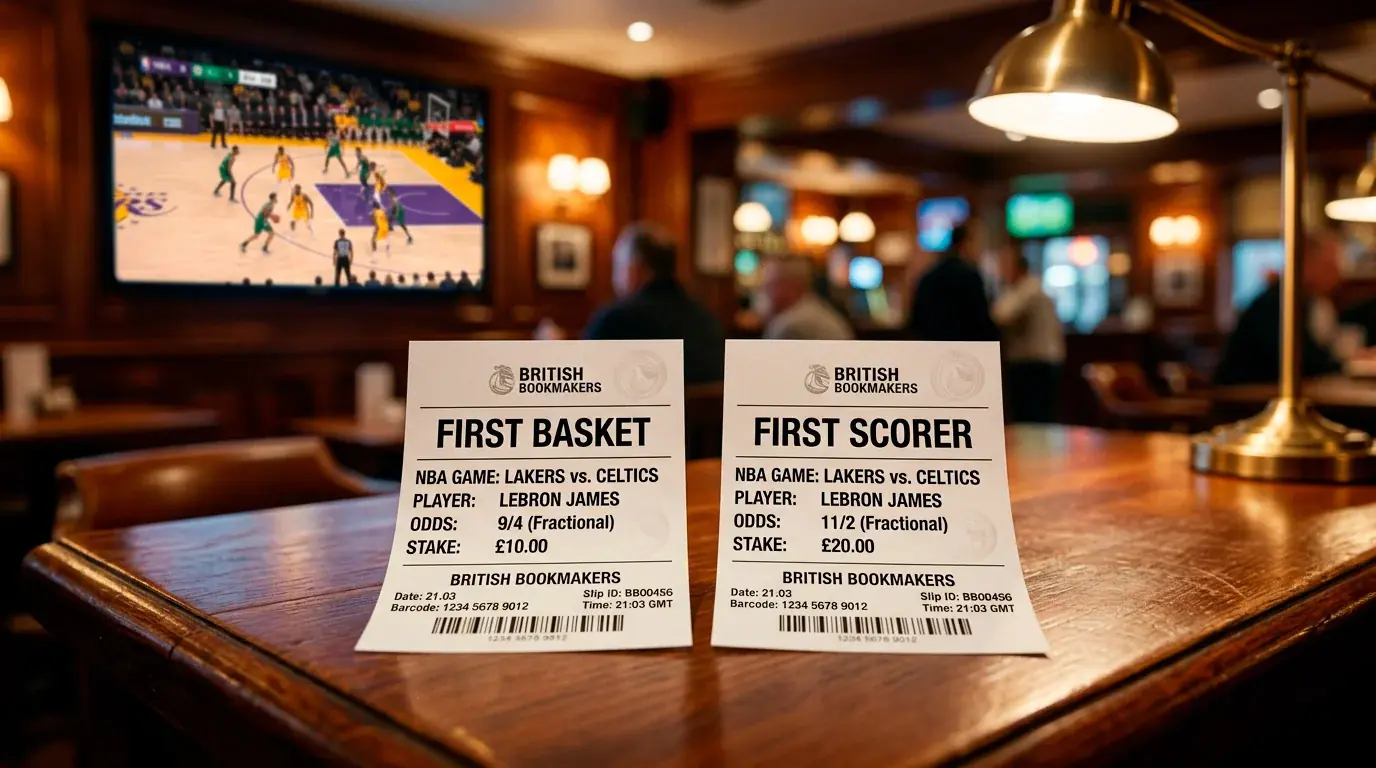
The free throw rule on bet365’s first basket market is unambiguous in the operator’s house rules: the bet settles on the first made field goal of the game, and free throws do not count. There is a separate first scorer market for bettors who want free throws to qualify. This is the cleanest treatment among the four big UK operators, and it makes bet365’s first basket market easier to interpret than some rivals where the same word is used for both products.
The operative paragraph reads, in plain language, that any made shot from open play resolves the bet – including putbacks off offensive rebounds, alley-oop finishes, and tip-ins. Free throws of any kind, technical or non-technical, are excluded. This matters when you are looking at high-foul matchups where the opening sequence is statistically likely to produce a free throw before a field goal.
What bet365 does not explicitly cover in its rule paragraph – and this is the part to watch – is the corner case where a player is fouled in the act of shooting and makes the basket plus the free throw. Most operators settle the bet on the field goal made (the basket), and treat the bonus free throw as irrelevant to the prop. bet365 follows this convention, but the rule text does not state it explicitly, which has occasionally created confusion when bettors expect “and-one” treatment to differ.
The bet365 in-play first basket window
The in-play window on bet365 is shorter than I would like – the market closes typically when the ball is tipped rather than when the first scoring event happens. So if you wanted to wait for the opening tip, see who got possession, and then bet, you cannot. The window is essentially pre-tipoff only on most fixtures.
This is operationally different from some rival UK operators, who keep the first basket market live until the first scoring event of any kind. Live or in-play betting represented 62.35% of the online sports betting market share in 2025, advancing at a 13.62% CAGR through 2031, and that growth is putting pressure on UK operators to extend in-play windows on prop markets – but bet365 has so far not extended its first basket window meaningfully.
The implication for a UK bettor is that bet365 is a “decide before tipoff” market for first basket. You cannot use it to react to the opening possession. If you want a live in-play first basket strategy, you need to use one of the rival UK operators that keeps the market open into the first thirty seconds or longer. The William Hill first basket window operates differently, with a longer in-play period that suits a live-reaction strategy.
The settlement edge cases worth knowing
Three edge cases come up often enough on bet365’s first basket market that they deserve flagging. The first is the late scratch – when your nominated player is announced as inactive between the time you placed your bet and the tipoff. bet365 voids the bet and refunds the stake, which is the industry-standard treatment but worth confirming because some smaller UK operators handle late scratches differently.
The second is the postponed game. If a fixture is postponed before the opening tip, the first basket bet is voided and refunded. If it is postponed after the opening tip but before any field goal has been made, the bet is also voided. If it is postponed after a field goal has been made, the result stands and the bet settles on the player who made that first field goal. This is consistent across UK operators in my experience.
The third is the “and one” edge case I mentioned earlier – a player who is fouled in the act of making a basket. The basket counts as the first field goal and the bet settles on that player; the bonus free throw is treated as irrelevant for first basket purposes. Same player gets both events, but the field goal is what triggers settlement.
When does bet365 open its NBA first basket market?
Roughly 20 to 26 hours before tipoff for regular-season games. Earlier opens give you the chance to find pricing inefficiencies before competing UK operators catch up, but they also reflect incomplete information about injuries and starting lineups.
Does bet365 count free throws as the first basket?
No. The first basket market on bet365 settles only on the first made field goal – a two- or three-pointer from open play. Free throws are excluded by rule. The first scorer market is the separate product where free throws do count.
Prepared by the nba First Basket Bets editorial staff.