Exact Method Betting: dunk, layup and 3-pointer prop math
 Available in US

- Exact Scoring Methods Strategy: Maximizing Layup, Dunk and 3-Pointer Odds
- The three shot categories – and the sub-categories nobody mentions
- How method pricing is built – and why books cut corners
- Which UK operators actually carry the method market
- First shot type by team tendency – the data layer most bettors skip
- Where the value spots actually live in method pricing
Exact Scoring Methods Strategy: Maximizing Layup, Dunk and 3-Pointer Odds
I was at 6/1 on Anthony Edwards to score the first basket against Dallas back in February. Reading the bench rotation that morning, I noticed every Edwards opening sequence over the previous fortnight had been the same – high pick-and-roll, slip, two-handed dunk. The method-of-first-basket market on the same operator had Edwards “by dunk” priced at 11/1, only marginally longer than the straight first basket. That is when I realised I had been sleeping on a layered market that prices in shot type – and that on most UK operators it is mispriced.
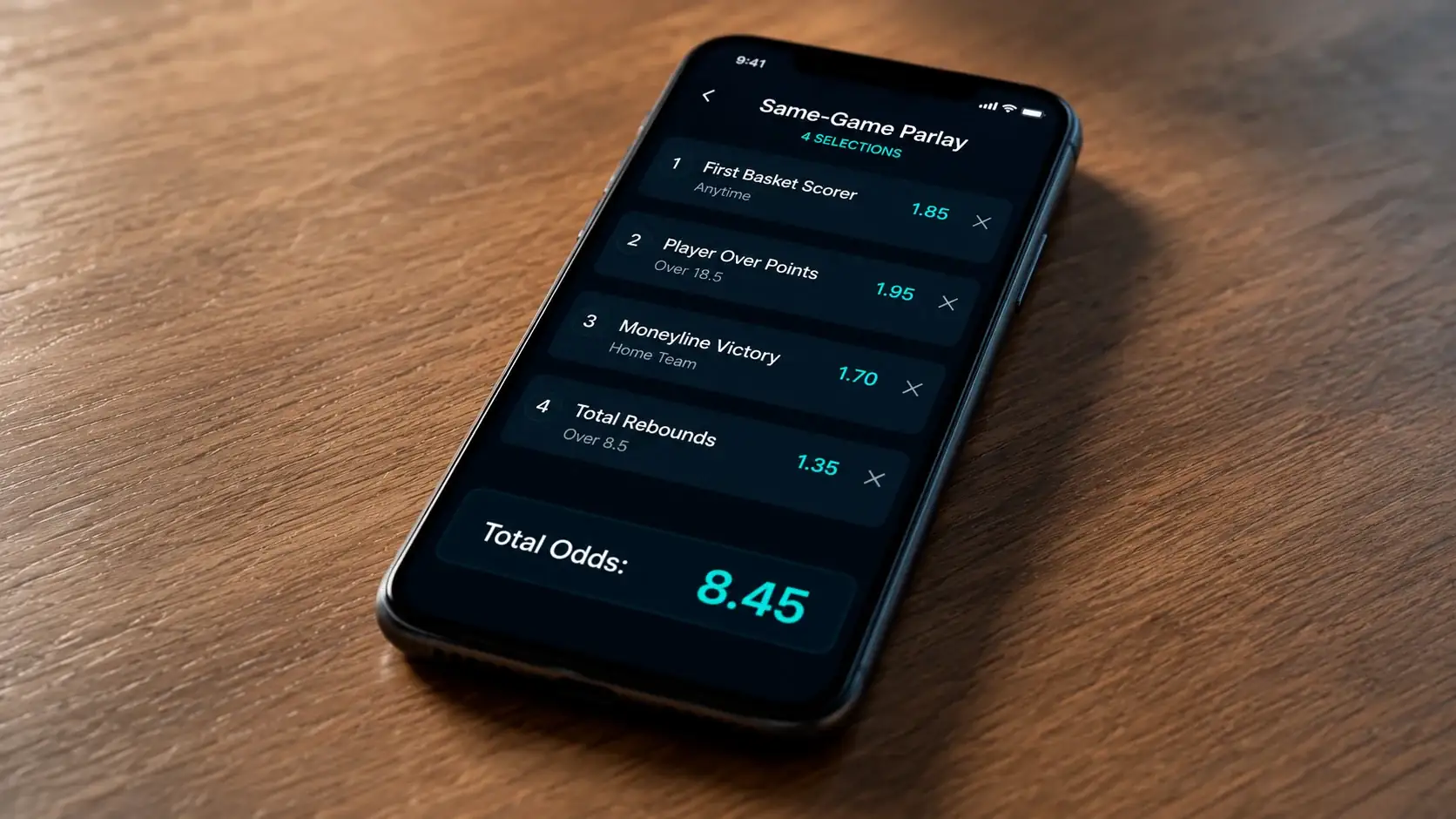
Method of first basket bets are exactly what they sound like. You are not just betting on which player makes the opening field goal, you are betting on how he makes it: layup, dunk, jumper or three-pointer, depending on which categories the book offers. UK sportsbooks treat this as a derivative market sitting on top of standard first basket pricing, which means the operator has to model both the player probability and the shot-type probability – and modelling two variables is twice as hard as modelling one. That is precisely where edge lives.
What I want to do here is map out how UK operators construct method markets, which shot categories they actually offer, where pricing patterns fall apart on tight matchups, and how to use team-specific opening shot tendencies to find value. By the end you should be reading the method market with the same fluency as the straight first basket line – and recognising which of the two is offering you the better implied probability on a given night.
Knowing whether a player prefers a layup or a three-pointer is vital when analyzing the NBA first basket leaders for 2025-26.
The three shot categories – and the sub-categories nobody mentions
I have spent more time than I would like to admit reading UK book rule paragraphs on method markets, and the categorisation is less standard than the marketing copy suggests. Most operators settle on three buckets, but the boundaries between them are not identical from one book to another, and the difference can decide whether your ticket cashes.
The first category is the layup, which most UK books define as any made field goal from inside roughly four feet that is not a dunk. This includes finger rolls, reverse layups, floaters in the very tight zone and tip-ins on offensive rebounds. Some operators bundle floaters with mid-range jumpers instead, which is a meaningful distinction when you are betting on a player like Sengun who lives in the in-between zone – read the rule text or you will misclassify the shot type entirely.
The second is the dunk. This sounds simple but is not. A two-handed slam off a roll is unambiguously a dunk. An alley-oop finished above the rim is a dunk. But what about a putback where the player goes up with two hands and stuffs the ball home off a missed shot? Most UK books count it as a dunk; one operator I have used categorises any shot off an offensive rebound as a layup regardless of the finishing motion. This is the kind of edge case where rule text matters more than odds.
The third bucket is the jumper or three-pointer, sometimes split into two separate categories on bigger market boards. A pull-up two from 18 feet and a catch-and-shoot three from the corner are different events with different probabilities and different player profiles, and the more granular UK books separate them into “first basket by 3-pointer” and “first basket by 2-point jumper” with distinct prices. The flat books that lump them together are pricing a much wider event and the odds reflect that.
How method pricing is built – and why books cut corners
Inside the trading desk of a UK book, method pricing is essentially the player probability multiplied by the shot-type conditional probability, with a vig layer on top. So if a player has a 20% first basket rate and his opening shot has historically been a dunk 40% of the time, the model price for “by dunk” is roughly 8% – implied odds around 11.5/1 before vig. If the operator is showing you 9/1 instead, they are charging more than the model suggests; if they are showing 14/1, they are leaving value on the table.
The league average team turnover percentage of 12.6% in the 2024-25 season feeds into this calculation in a way most casual bettors miss. Turnovers in the opening possession do not just delay the first basket – they reshuffle which type of shot is most likely. A clean opening possession often produces a designed half-court set, which favours jumpers and threes. A scramble after a turnover tends to produce a transition layup or dunk. So a team’s turnover profile shifts the conditional method probabilities in ways the operator’s model may or may not capture.
Anthony Edwards, Jamal Murray and Neemias Queta tied the NBA lead with 15 first baskets each in the 2025-26 regular season – and crucially, those three players score their first baskets via very different shot types. Edwards lives off transition pull-ups and rim attacks; Murray hits early threes off staggered screens; Queta cleans up offensive rebounds with putback dunks. If you are pricing a method market on these three, the fair “by dunk” price for Queta should be much shorter than for Murray, and yet on flat-pricing books the gap is often only one or two pegs of odds.
Which UK operators actually carry the method market
This is the question I get most often, and the answer is uneven. The two largest UK operators by market share – bet365 and William Hill – both list method markets on most regular-season NBA games, though bet365 typically opens earlier and offers more granular sub-categories. Paddy Power runs method markets selectively, usually only on showcase games or playoff fixtures, and Sky Bet’s method depth is the lightest of the four – often only listing it on the marquee national-TV games.
Smaller UK operators sometimes offer the headline first basket market without the method derivative at all, which is a product decision rather than an oversight. Method markets attract less volume than straight first basket, and for a smaller book the trading effort to keep the line correctly priced may not justify the marginal volume. So if your account is with a niche operator, do not be surprised if the method market is missing entirely.
The practical implication is that method betting requires multi-book coverage. I keep accounts at three of the four big UK operators specifically so I can shop method prices across them – the disagreement on player-by-method pricing across two books is sometimes 15-20% in implied probability, which is the kind of arbitrage gap you simply do not see on the straight first basket market.
First shot type by team tendency – the data layer most bettors skip
I have been quietly tracking the opening shot type for every NBA team for two seasons now, and the pattern is more rigid than the league acknowledges. Teams have signature opening plays. Coaches script the first possession in a way that favours one shot type over the others, and that signature persists across multiple games until the coach actively changes it.
Take Victor Wembanyama as a case study. In a 2025-26 playoff write-up, his first-basket rate sat at 20.7% across 58 starts, and the San Antonio Spurs won the opening tip 77% of the time, with Wembanyama taking 27.6% of his team’s first shots. What that data does not tell you on its own is the shot-type breakdown – but if you watch the tape, the Spurs’ opening play with Wembanyama heavily favours a stretch three or a face-up jumper, not a rim attack. So if a UK book is pricing his “by dunk” first basket at the same multiple of his “by jumper” price as a typical centre, the dunk line is overpriced and the jumper line is the value side.
This is the layered approach I work with: the player probability comes from the FB rate; the shot-type conditional comes from team scripting; the matchup adjustment comes from the opposing defence’s coverage tendency. Three inputs, and method pricing only fully accounts for the first one.
Where the value spots actually live in method pricing
The cleanest value pattern I have found is on dunk-specialist big men playing teams that switch defensively. When you have a centre whose opening play is consistently a roll-to-the-rim dunk, and the opposing defence switches everything onto guards, the roll lane opens up early and the dunk probability is materially higher than the operator’s flat model assumes. UK books often do not adjust for opponent defensive scheme on the opening possession – they price method off the player’s season-long shot mix and stop there.
Track all player statistics and betting trends directly on our trusted NBA prop betting portal.
The opposite mistake – overpricing dunks – shows up on guards who get to the rim but typically finish with floaters or layups rather than slams. UK operators sometimes lump “by dunk” with “by layup” on guards, which removes the discrimination entirely. When the categories are split, the dunk price on a guard is often laughably long because the operator has not modelled the actual shot mix correctly.
The third pattern: the three-point method market on snipers playing teams that ICE the pick-and-roll. ICE coverage funnels the ballhandler to the sideline and forces a contested mid-range or a kickout to the trailer behind the arc. If your book is showing equal three-point method probability across the starting five, but the actual scripting puts the ball in the corner shooter’s hands on the opening play, the corner shooter’s three-point method line is the value bet.
The link between method markets and broader first basket strategy comes back to one principle – every layered market on a UK sportsbook is an opportunity for the operator to mis-model two variables at once. The same logic applies when you compare first basket against first scorer pricing: the more rule-text variables, the more likely the book has rounded one of them.
Do all UK sportsbooks offer method of first basket markets?
No. The four largest UK operators carry method markets reliably on regular-season games, but smaller operators often skip them entirely. Method markets attract less volume than straight first basket, so smaller books do not always justify the trading effort.
What counts as a dunk versus a layup in UK sportsbook rules?
Most UK books define a dunk as any made field goal where the ball is forced through the rim, including alley-oops and most putback slams. A layup is a finish from close range without the dunking motion. Operators differ on edge cases like reverse finishes and tip-ins, so check the rule text on your specific book.
Prepared by the nba First Basket Bets editorial staff.