Basketball Prop Markets: first basket vs first scorer differences
 Available in US
- Bet Slip Discrepancies: Field Goals vs Free Throws Settlement Rules
- What counts as a basket – the field-goal-only definition
- What counts as a score – the all-points definition
- The free throw edge case where the markets diverge
- How UK books write the rule into their terms
- How the difference shows up in pricing
Bet Slip Discrepancies: Field Goals vs Free Throws Settlement Rules
I lost £40 on a Tuesday night in 2018 because I assumed two markets were the same thing. The slip read “first scorer – Joel Embiid +500”, he drew a shooting foul on the opening possession, sank one of two free throws, and my ticket settled at evens before the first field goal had even been attempted. That night taught me a rule I have since drilled into every UK bettor I work with – first basket and first scorer are not interchangeable terms, and the difference lives in the small print of the settlement clause.
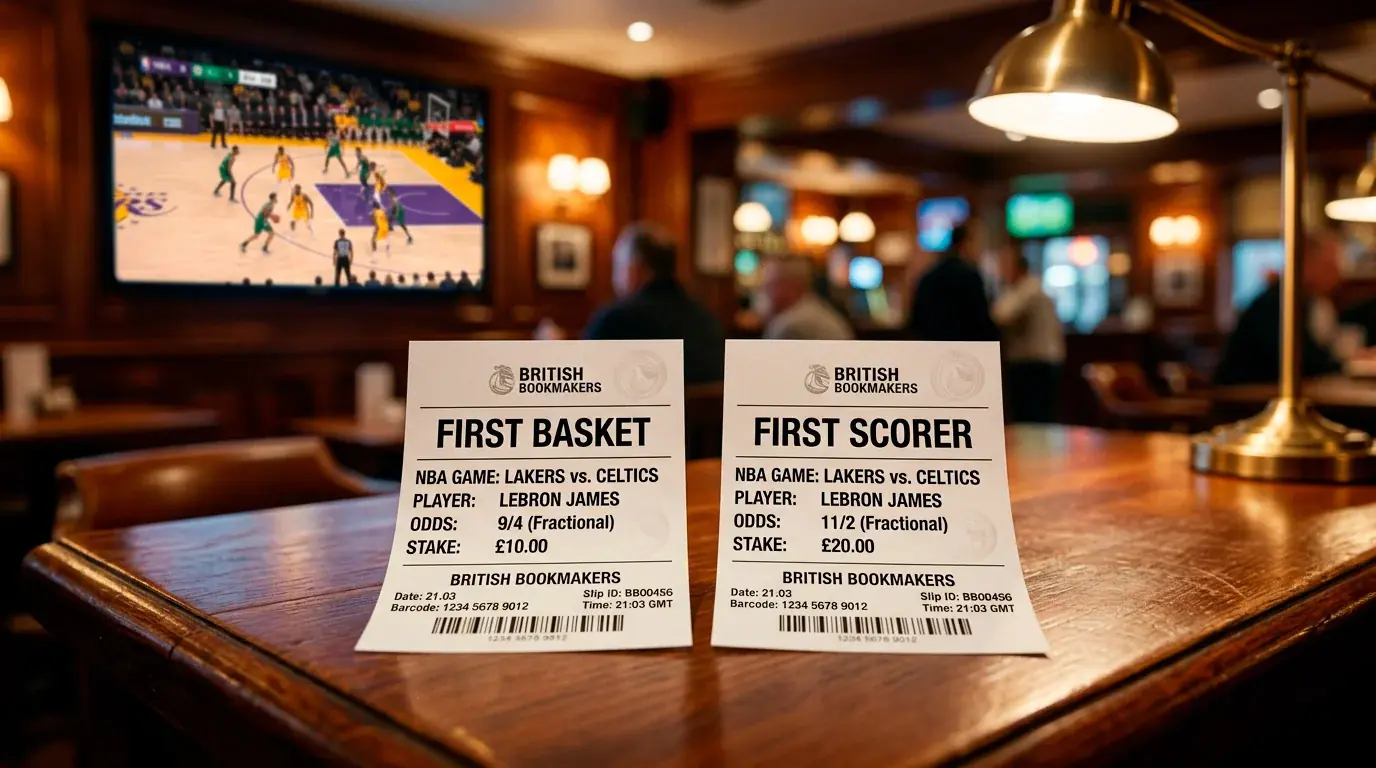
The distinction is mechanical, not philosophical. A first basket bet pays out only when your player makes the first successful field goal of the game – a shot from the floor, two or three points, no exceptions. A first scorer bet pays out the moment your player puts a single point on the board, free throws included. On UK sportsbooks both markets sit next to each other on the same NBA prop tab, and the prices look almost identical, which is precisely why so many bettors fail to register that the underlying contracts settle on different events.
I have written this guide for the UK reader who has scrolled past the first scorer line, clicked it without reading, and then watched a foul-prone centre rinse their stake. By the time you finish you should be able to tell, at a glance, which version of the market your operator is offering, why the price you see is not the price you think you are getting, and where the field goal versus point distinction creates a real edge for the disciplined bettor. We are going to walk through what counts as a basket, what counts as a score, the free throw edge case in fine forensic detail, how UK books actually phrase their rule text, and what all of that means for pricing – finishing with the practical knock-on effects for anyone shopping prices across operators.
What counts as a basket – the field-goal-only definition
I once timed a stopwatch on the opening minute of a Pacers game just to test a theory. From tipoff to the first successful field goal took 47 seconds – and in those 47 seconds there had been a turnover, a defensive rebound, two free throws and an offensive foul. The first scorer market had already settled. The first basket market was still wide open.
A basket, in the strict prop sense used by every regulated UK book, is a made field goal – a two-pointer or a three-pointer that goes through the net during live play. Free throws, technical foul shots and flagrant foul shots are excluded by definition. So if a team draws a shooting foul on the opening possession and the player at the line nets two from the stripe before any made field goal occurs, the score reads 2-0 but the first basket bet remains unsettled. Whoever ends up making the first shot from the floor – that team’s player or somebody on the other end – collects.
This matters more than it sounds because the league average team turnover percentage during the 2024-25 season was 12.6%, which means roughly one in eight opening possessions never even reaches a shot attempt. Add to that the volume of fouls drawn on the first defensive set of the night, and you have a rolling probability that the first scoring event of the game is a free throw rather than a field goal – well above the casual viewer’s intuition.
The implication for value is straightforward. If you are pricing a first basket prop in your head using the same mental model as a first scorer, you are systematically overestimating how often physical, foul-drawing centres or guards who get to the line cash the bet. They cash a first scorer. They miss a first basket. Different contract, different math.
Three rule-text checks I run before placing a first basket bet: the market uses “basket” or “field goal” rather than “score” or “point”, the settlement clause excludes free throws by name, and the market remains live until the first made field goal.
What counts as a score – the all-points definition
Picture the first 90 seconds of a high-foul matchup. Two teams trading bodies, the away centre picking up an early foul, the home guard stepping to the line. He sinks one. The clock has barely moved, but every first scorer ticket in the world has just been resolved. That is the first scorer market in a single sentence – any point, by any method, ends the contract.
First scorer settles on the player who registers the first point of the game, full stop. A free throw counts. A made field goal counts. A successful technical foul shot from a non-shooting infraction counts in some operators’ rule books and is voided by others, which is one reason the rule text varies more than you might assume. The headline odds are typically tighter on first scorer than on first basket precisely because the universe of qualifying events is larger – a fouled shooter cashes the first scorer ticket without ever needing the field goal to drop.
That tighter pricing is not generosity. It is the book correctly modelling that more events trigger payout, so the implied probability per player is higher. When you compare a first scorer line at 5/1 against a first basket line at 6/1 on the same player, you are looking at two different underlying probabilities – roughly 16.7% versus 14.3% implied – and the gap is doing the work of compensating for the free throw exclusion. If you treat the two markets as substitutable, you will systematically pick the worse of the two without realising it.
The free throw edge case where the markets diverge
I want to walk through a single, very specific opening sequence because nothing teaches the rule like a worked example. The home centre wins the tipoff cleanly, his guard pushes the ball up, the wing drives the lane and gets fouled before the shot leaves his hand. Two free throws coming. He nets the first, misses the second. The score is now 2-0 with 11:23 on the clock. No field goal has been attempted, let alone made.
If you held a first scorer ticket on that wing, you have already won – the free throw resolves the market, the bet is paid, and the rest of the game is meaningless to you. If you held a first basket ticket on the same player, you are still alive but with a slightly worse outlook because that wing has already used his early shot opportunity for free throws rather than a field goal. The next made field goal – by anyone – settles your bet. It might be him on the next possession. It might be the away guard transitioning the other way. It might be a putback off a missed three.
This is the edge case that costs UK bettors money: assuming the early free throw “got there first” but then forgetting that the field goal market keeps running. I have seen ticket-holders abandon their position mentally after that opening free throw, then watch the bet hit two minutes later and realise they were holding live equity all along. I have also seen the inverse – bettors think their first scorer is still pending after a free throw, when it has already settled and they are now functionally betting on nothing.
The rule of thumb I use: any time you bet either market, do not look at the score during the opening sequence. Look at the shot type. If the score moves and the cause was a foul shot, your first scorer is resolved and your first basket is still pending. If the score moves and the cause was a make from the floor, both markets have just collapsed.
How UK books write the rule into their terms
The UK sports betting market generated approximately £2.48 billion in annual gross gambling yield as of early 2026, and a significant slice of that volume passes through prop markets where the underlying rule text is buried in the operator’s house rules section. I read those sections so you do not have to, and here is the pattern across the four big UK operators offering first basket and first scorer markets.
The phrasing tends to fall into one of three buckets. Some books label both markets identically as “first scorer” and add a sub-clause specifying field-goal-only settlement – which means the headline name is misleading. Others use “first basket” and “first scorer” as distinct named markets, with separate odds tabs and separate rule paragraphs. A third group offers only the broader first scorer market and quietly does not list a field-goal-only variant, which the casual UK bettor often interprets as an absence rather than a deliberate product choice.
None of those phrasings are right or wrong – they are just operator-by-operator conventions. What matters is that you read the rule paragraph, not the market name, before you commit a stake. I cross-reference the same player across operators on a typical Wednesday night, and the headline odds frequently differ by 10-15% on what looks like the same proposition because one operator is pricing first basket while the other is pricing first scorer. This is also where method-of-basket bets layer on top of the field-goal-only model, adding another rule clause about whether the make has to be a layup, dunk, jumper or three-pointer.
If your book’s rule paragraph is silent on free throws, treat the market as ambiguous and ask in their live chat before staking. I have done this on three operators in the last two seasons and every time the support agent confirmed the field goal exclusion in writing – which gave me a paper trail in case of a settlement dispute.
How the difference shows up in pricing
Even the most likely first basket scorer in any given game converts at less than 20%, while a player priced as 15% likely to score first will miss roughly 85% of attempts – a margin of error that means even a tiny pricing mismatch between the two markets compounds quickly across a season. As OddsIndex’s analyst team have put it, “first basket ranks among the highest-variance props in basketball. The margins are razor-thin. But margins matter less when you have a 20%+ historical rate, home-court or tip advantage, and odds that undervalue both.”
The practical pricing implication is that a player who shoots from the line frequently – your foul-drawing centres and slashing wings – should be priced shorter on first scorer than on first basket. When the gap between the two prices on a UK book is too narrow, the first basket line is offering relative value because the operator has not adequately discounted the free-throw probability. When the gap is too wide, the first scorer line is the value side. I have built a small spreadsheet that flags any UK operator where the first basket and first scorer prices on the same player sit within 5% implied probability of each other – that gap is a soft signal that one of the two is mispriced.
Do not overcomplicate this. The single most actionable habit is reading the rule paragraph every time you place a prop and naming the market correctly in your bet log. If you cannot tell from the operator’s interface whether you are betting first basket or first scorer, you are not yet ready to stake – go and find out, then come back.
Are first basket and first scorer the same bet on UK sportsbooks?
No. First basket settles only on the first made field goal – a two- or three-pointer from open play. First scorer settles on the first point of any kind, including free throws. Same player, same game, two different contracts.
If a player makes a free throw before any field goal, does my first basket bet lose?
No, your first basket bet remains live. Free throws are excluded from first basket settlement. The bet only resolves once a player makes the first field goal of the game, regardless of any free throws that came earlier.
Written by the editors at nba First Basket Bets.